PDF · English
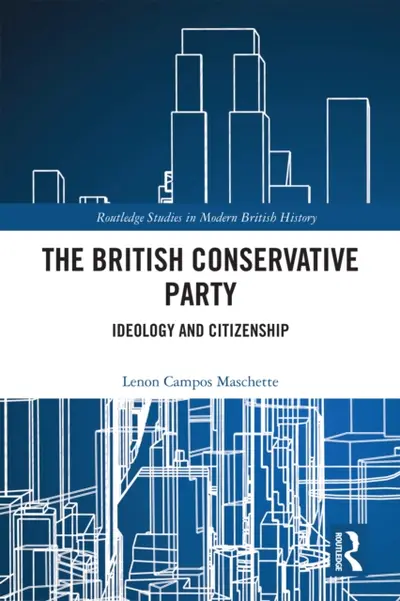
British Conservative Party
Ideology and Citizenship
Price and availability
$64.99
Available in: Andorra, Austria, Australia, Belgium, Bulgaria, Canada, Switzerland, Cyprus, Czechia, Germany, Denmark, Estonia, Spain, Finland, France, United Kingdom, Guernsey, Greece, Croatia, Hungary, Ireland, Isle of Man, Iceland, Italy, Jersey, Japan, Liechtenstein, Lithuania, Luxembourg, Latvia, Monaco, Malta, Netherlands, Norway, Poland, Portugal, Romania, Sweden, Slovenia, Slovakia, San Marino, United States, Vatican City, South Africa
Stores: US, UK, Canada, EU, Australia.
Sign in to buyThe price is re-checked by the server before payment.
For personal use under the eBook licence.
- Format
- DRM
- Not stated by the publisher
- Language
- English
- Publisher
- Taylor & Francis
- Published
- 20 February 2024
- ISBN
- 9781003849902
- Subjects
- United Kingdom, Great Britain, 20th century, 21st century, British & Irish history, Social & political philosophy, Conservatism & right-of-centre democratic ideologies, Political parties, United Kingdom, Great Britain, Political ideologies and movements, Political parties and party platforms, Civics and citizenship
About this book
Citizenship has been an ill-explored subject within Conservative Party studies. When this subject has been analysed, it is usually made by scholars of citizenship, more concerned with general overviews than understanding specific Conservative approaches to the concept. This book intends to fill this gap.Through a rigorous analysis of sources, the author explores how the Conservative Party contested the welfare model of citizenship and sought to recreate a new relationship between the individual, the state and civil society. Starting from Thatcher's idea of 'active citizenship' and going through the analysis of John Major's 'Citizen's Charter' and David Cameron's 'Big Society' project, the book sheds new light on how these developments responded to long-term problems while dialoguing with specific circumstances and the different Conservative leaders' ideas.From an ideological perspective, the author analyses how these leaders echoed and re-signified more traditional political ideas and ideologies while negotiating with and borrowing new flourishing concepts during those years. Far from being a unidimensional citizenship concept, in reinterpreting old ideas and utilizing new ones, these Conservatives elaborated a complex and many times contradictory citizenship model that tried to address both long-lasting and more timely issues that overlapped in British society.
Bibliographic data © Gardners Books Ltd.