EPUB · English
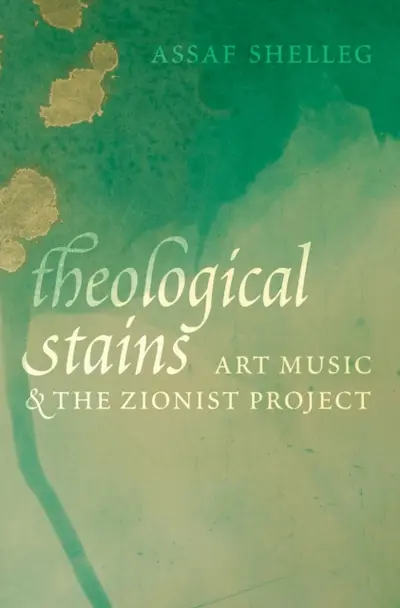
Theological Stains
Art Music and the Zionist Project
Price and availability
$62.99
Available in: Andorra, Austria, Australia, Belgium, Bulgaria, Canada, Switzerland, Cyprus, Czechia, Germany, Denmark, Estonia, Spain, Finland, France, United Kingdom, Guernsey, Greece, Croatia, Hungary, Ireland, Isle of Man, Iceland, Italy, Jersey, Japan, Liechtenstein, Lithuania, Luxembourg, Latvia, Monaco, Malta, Netherlands, Norway, Poland, Portugal, Romania, Sweden, Slovenia, Slovakia, San Marino, United States, Vatican City, South Africa
Stores: US, UK, Canada, EU, Australia.
Sign in to buyThe price is re-checked by the server before payment.
For personal use under the eBook licence.
- Format
- EPUB
- DRM
- Not stated by the publisher
- Language
- English
- Publisher
- Oxford University Press
- Published
- 20 November 2020
- ISBN
- 9780197504666
- Subjects
- Western "classical" music, Literary studies: general, Middle Eastern history, AVLA, Literary studies: general, NHG
About this book
Theological Stains offers the first in-depth study of the development of art music in Israel from the mid-twentieth century to the turn of the twenty-first. In a bold and deeply researched account, author Assaf Shelleg explores the theological grammar of Zionism and its impact on the art music written by emigrant and native composers. He argues that Israeli art music, caught in the tension between a bibliocentric territorial nationalism on the one hand and the histories of deterritorialized Jewish diasporic cultures on the other, often features elements of both of these competing narratives. Even as composers critically engaged with the Zionist paradigm, they often reproduced its tropes and symbols, thereby creating aesthetic hybrids with 'theological stains.' Drawing on newly uncovered archives of composers' autobiographical writings and musical sketches, Shelleg closely examines the aesthetic strategies that different artists used to grapple with established nationalist representations. As he puts the history of Israeli art music in conversation with modern Hebrew literature, he weaves a rich tapestry of Israeli culture and the ways in which it engaged with key social and political developments throughout the second half of the twentieth century. In analyzing Israeli music and literature against the backdrop of conflicts over territory, nation, and ethnicity, Theological Stains provides a revelatory look at the complex relationship between art and politics in Israel.
Bibliographic data © Gardners Books Ltd.