PDF · English
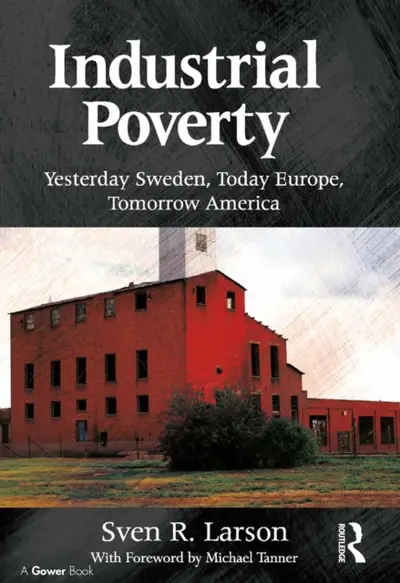
Industrial Poverty
Yesterday Sweden, Today Europe, Tomorrow America
Price and availability
$72.99
Available in: Andorra, Austria, Australia, Belgium, Bulgaria, Canada, Switzerland, Cyprus, Czechia, Germany, Denmark, Estonia, Spain, Finland, France, United Kingdom, Guernsey, Greece, Croatia, Hungary, Ireland, Isle of Man, Iceland, Italy, Jersey, Japan, Liechtenstein, Lithuania, Luxembourg, Latvia, Monaco, Malta, Netherlands, Norway, Poland, Portugal, Romania, Sweden, Slovenia, Slovakia, San Marino, United States, Vatican City, South Africa
Stores: US, UK, Canada, EU, Australia.
Sign in to buyThe price is re-checked by the server before payment.
For personal use under the eBook licence.
- Format
- DRM
- Not stated by the publisher
- Language
- English
- Publisher
- Taylor & Francis
- Published
- 23 May 2016
- ISBN
- 9781317117070
- Subjects
- Sweden, Economics, finance, business & management, Political economy, Economic & financial crises & disasters, International business, Operational research, Public administration / Public policy, Macroeconomics, Public finance and taxation
About this book
Conventional wisdom says that Europe's crisis is a financial crisis. But is this really the case? In Industrial Poverty, economist Sven R. Larson, challenges this view and suggests instead that Europe is in a state of permanent economic decline. The crisis, says Larson, is in fact a welfare-state crisis. Over decades, government has grown too big for the private sector to pay for; when the recession hit in 2008 most European economies could no longer bear the burden of the welfare state. Raging deficits, accelerating unemployment and harsh austerity policies hurled the continent into more than a regular recession. Europe is entering a new economic state: industrial poverty. Using Sweden in the 1990s as an example, Larson shows how a welfare-state crisis combined with the wrong kind of austerity policies replaces prosperity with industrial poverty. In a desperate effort to balance the budget and save the welfare state in the midst of the crisis, the Swedish government subjected the country to some of the toughest austerity measures on record. The outcome was a permanent reduction in the standard of living for Swedish families as well as the standard of government services. Today, Europe is going through the same transition into industrial poverty. Tomorrow, it could be the United States, unless Congress and the President take decisive action against the runaway budget deficit.
Bibliographic data © Gardners Books Ltd.