PDF · English
Man Who Knew Too Much
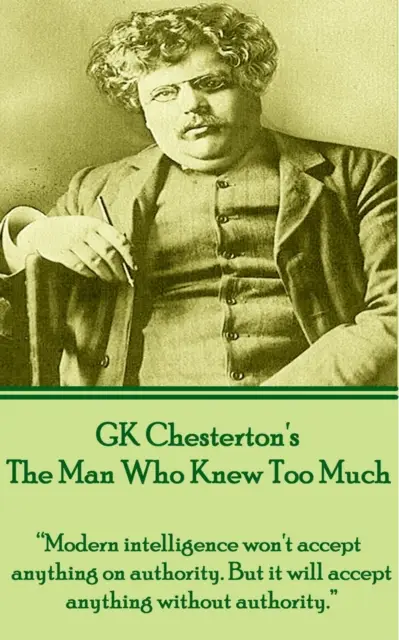
“Modern intelligence won''t accept anything on authority. But it will accept anything without authority.”
Price and availability
$1.99
Available in: Andorra, Austria, Australia, Belgium, Bulgaria, Canada, Switzerland, Cyprus, Czechia, Germany, Denmark, Estonia, Spain, Finland, France, United Kingdom, Guernsey, Greece, Croatia, Hungary, Ireland, Isle of Man, Iceland, Italy, Jersey, Japan, Liechtenstein, Lithuania, Luxembourg, Latvia, Monaco, Malta, Netherlands, Norway, Poland, Portugal, Romania, Sweden, Slovenia, Slovakia, San Marino, United States, Vatican City, South Africa
Stores: US, UK, Canada, EU, Australia.
Sign in to buyThe price is re-checked by the server before payment.
For personal use under the eBook licence.
- Format
- DRM
- Not stated by the publisher
- Language
- English
- Publisher
- Copyright Group
- Published
- 20 August 2013
- Pages
- 108
- ISBN
- 9781780007175
- Subjects
- Classic fiction (pre c 1945), Biographical fiction / autobiographical fiction
About this book
The Man Who Knew Too Much is a compilation of eight detective stories by the English philosopher and prolific writer Gilbert Keith Chesterton. The protagonist of these stories is the man of the title, Horne Fisher, an upper-class detective whose investigative gifts often put him in uncomfortable situations where he has to take difficult decisions. In stories like "e;The Face in the Target"e; and "e;The Vengeance of the Statue,"e; which are all told by a third-person narrator, Fisher uses his deductive faculties and theatrical representations to absolve the innocent and incriminate the guilty. Most of the crimes dealt with in these stories are about mysterious murders. Yet, Fisher has also to solve other cases related to theft as well as to disputes over money and estates. Due to his friendly or family relationships with influential statesmen, Fisher often finds himself with "e;too much"e; knowledge about the way things are run in the country. This paradoxically valuable and embarrassing knowledge forces him many a time to let the murderer get away with his crime in order to avoid something more dangerous to happen to the country such as war or rebellion.
Bibliographic data © Gardners Books Ltd.