PDF · English
Caring for Place
Community Development in Rural England
Price and availability
$55.99
Available in: Andorra, Austria, Australia, Belgium, Bulgaria, Canada, Switzerland, Cyprus, Czechia, Germany, Denmark, Estonia, Spain, Finland, France, United Kingdom, Guernsey, Greece, Croatia, Hungary, Ireland, Isle of Man, Iceland, Italy, Jersey, Japan, Liechtenstein, Lithuania, Luxembourg, Latvia, Monaco, Malta, Netherlands, Norway, Poland, Portugal, Romania, Sweden, Slovenia, Slovakia, San Marino, United States, Vatican City, South Africa
Stores: US, UK, Canada, EU, Australia.
Sign in to buyThe price is re-checked by the server before payment.
For personal use under the eBook licence.
- Format
- DRM
- Not stated by the publisher
- Language
- English
- Publisher
- Taylor & Francis
- Published
- 22 July 2022
- ISBN
- 9781000618662
- Subjects
- England, Landscape art & architecture, City & town planning - architectural aspects, Rural communities, Urban communities, Human geography, The environment, Urban & municipal planning, Rural planning, England, Public administration / Public policy, Political activism / Political engagement, Urban and municipal planning and policy
About this book
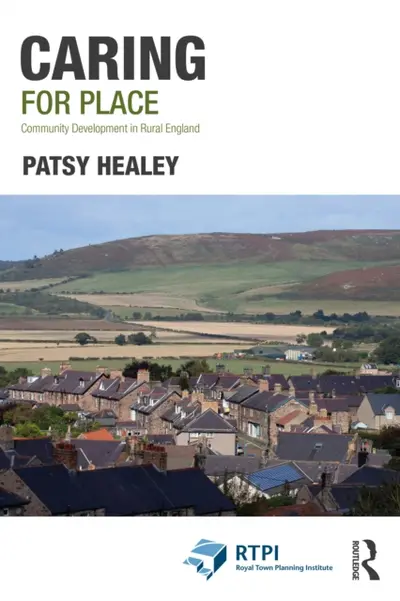
This book draws on preeminent planning theorist Patsy Healey's personal experiences as a resident of a small rural town in England, to explore what place and community mean in a particular context, and how different initiatives struggle to get a stake in the wider governance relations while maintaining their own focus and ways of working. Throughout the book, Healey assesses the public value generated by community initiatives and the impact of such activity on wider governance dynamics.Healey explores the power which small communities are able to mobilise through self-organisation and grassroots activism. Through the lens of Wooler and Glendale as a micro-society, the book centres on a community experiencing an economic and demographic transition. It focuses on three initiatives developed and led by local people - a small community development trust, an informal attentionmobilising network, and a Neighbourhood Plan project which uses an opportunity provided within the formal planning system. It examines how, in such civil society activism, people came together to promote local development in a place and community neglected by the dominant political economy.The book details the power and force of community initiative and its potential for transforming both the future possibilities for the place and community itself, as well as wider governance relations. Overall, it seeks to enrich academic and policy discussion about how the relations between formal government and civil society energy could evolve in more productive and progressive directions.
Bibliographic data © Gardners Books Ltd.