EPUB · English
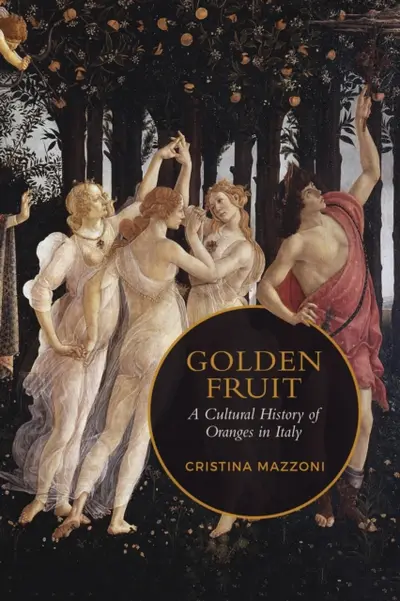
Golden Fruit
A Cultural History of Oranges in Italy
Price and availability
$67.99
Available in: Andorra, Austria, Australia, Belgium, Bulgaria, Canada, Switzerland, Cyprus, Czechia, Germany, Denmark, Estonia, Spain, Finland, France, United Kingdom, Guernsey, Greece, Croatia, Hungary, Ireland, Isle of Man, Iceland, Italy, Jersey, Japan, Liechtenstein, Lithuania, Luxembourg, Latvia, Monaco, Malta, Netherlands, Norway, Poland, Portugal, Romania, Sweden, Slovenia, Slovakia, San Marino, United States, Vatican City, South Africa
Stores: US, UK, Canada, EU, Australia.
Sign in to buyThe price is re-checked by the server before payment.
For personal use under the eBook licence.
- Format
- EPUB
- DRM
- Not stated by the publisher
- Language
- English
- Publisher
- University of Toronto Press
- Published
- 20 March 2019
- Pages
- 224
- ISBN
- 9781487515775
- Subjects
- Italy, Sardinia, Sicily, Italian, Film theory & criticism, Literature: history & criticism, Literary studies: general, European history, Italian, ATFA, Literature: history and criticism, Literary studies: general, NHD
About this book
Through a close reading of key texts, including poetic and spiritual writings, fairy tales, and a botanical treatise, Golden Fruit examines the role of oranges in Italian culture from their introduction during the medieval period through to the present day. Featuring a beautiful full-colour spread, Cristina Mazzoni's book brings together artistic depictions, literary analysis, historical context, and popular culture to investigate the changing representations of the orange over time and across the Italian peninsula.Oranges were introduced to Italy in the 1200s, many centuries after beloved Mediterranean fruits such as grapes, figs, and pomegranates-all well-known since Antiquity. Not burdened with age-old meanings and symbolism, then, oranges in early modern times provided a malleable image for artists, writers, and scientists alike. Thus, in the Middle Ages and Renaissance, oranges appear in visual and verbal representations as an effective aid in physical and spiritual health, as symbols of romantic and of divine love, and as signs of geographic allegiance to one's citrus-rich land. Baroque poets, botanists, and painters regularly compared oranges to women for their shared hybrid nature, whereas later folklore presented this dual character of oranges from an economic standpoint, as both precious and dangerous. The violence intrinsic to oranges in these Sicilian texts from the eighteen and nineteen hundreds returns in the controversial representations of the orange harvest in early twenty-first century Italy.
Bibliographic data © Gardners Books Ltd.