PDF · English
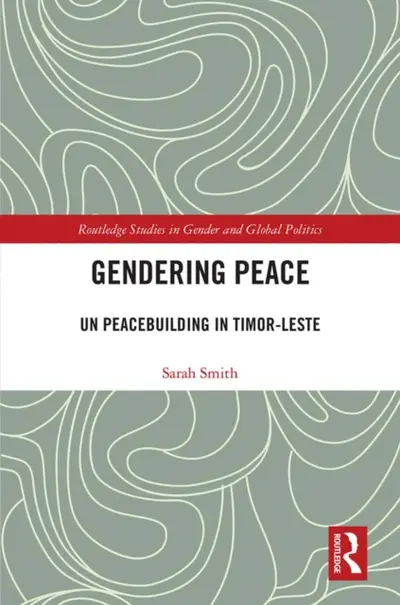
Gendering Peace
UN Peacebuilding in Timor-Leste
Price and availability
$63.99
Available in: Andorra, Austria, Australia, Belgium, Bulgaria, Canada, Switzerland, Cyprus, Czechia, Germany, Denmark, Estonia, Spain, Finland, France, United Kingdom, Guernsey, Greece, Croatia, Hungary, Ireland, Isle of Man, Iceland, Italy, Jersey, Japan, Liechtenstein, Lithuania, Luxembourg, Latvia, Monaco, Malta, Netherlands, Norway, Poland, Portugal, Romania, Sweden, Slovenia, Slovakia, San Marino, United States, Vatican City, South Africa
Stores: US, UK, Canada, EU, Australia.
Sign in to buyThe price is re-checked by the server before payment.
For personal use under the eBook licence.
- Format
- DRM
- Not stated by the publisher
- Language
- English
- Publisher
- Taylor & Francis
- Published
- 26 September 2018
- ISBN
- 9781351261036
- Subjects
- East Timor, Peace studies & conflict resolution, Gender studies, gender groups, Politics & government, United Nations & UN agencies, Warfare & defence, Peacekeeping operations, Regional geography, East Timor / Timor-Leste, Gender studies, gender groups, International institutions / intergovernmental organizations, Peacekeeping operations
About this book
In 1999, after 24-years of violent military occupation by Indonesian forces, the small country of Timor-Leste became host to one of the largest UN peace operations. The operation rested on a liberal paradigm of statehood, including nascent ideas on gender in peacebuilding processes. This book provides a critical feminist examination of the form and function of a gendered peace in Timor-Leste. Drawing on policy documents and field research in Timor-Leste with national organisations, international agencies and UN staff, the book examines gender policy with a feminist lens, exploring and developing a more complex account of 'gender' and 'women' in peace operations. It argues that gendered ideologies and power delimit the possibilities of building a gender-just peace, and contributes deep insight into how gendered logics inform peacebuilding processes, and specifically how these play out through the implementation of policy that explicitly seeks to reorder gender relations at sites in which peace operations deploy. By utilising a single case study, the book provides space to examine both international and national discourses, and contextualises its analysis of Women, Peace and Security within local histories and contexts. This book will be of interested to scholars and students of gender studies, global governance, International Relations, and security studies.
Bibliographic data © Gardners Books Ltd.