EPUB · English
Immaculate Forms
Uncovering the History of Women''s Bodies
Price and availability
Not sold in this region
Available in: Andorra, Austria, Australia, Belgium, Bulgaria, Switzerland, Cyprus, Czechia, Germany, Denmark, Estonia, Spain, Finland, France, United Kingdom, Guernsey, Greece, Croatia, Hungary, Ireland, Isle of Man, Iceland, Italy, Jersey, Japan, Liechtenstein, Lithuania, Luxembourg, Latvia, Monaco, Malta, Netherlands, Norway, Poland, Portugal, Romania, Sweden, Slovenia, Slovakia, San Marino, Vatican City, South Africa
Stores: UK, EU, Australia. Not available in the United States store.
This title cannot be bought in this store yet: its supplier terms, territorial rights or price are still being confirmed.
For personal use under the eBook licence.
- Format
- EPUB
- DRM
- Not stated by the publisher
- Language
- English
- Publisher
- Profile
- Published
- 5 September 2024
- ISBN
- 9781782836346
- Subjects
- Ancient World, History, Social & cultural history, Feminism & feminist theory, History of medicine, Popular medicine & health, Ancient World, Gender studies: women and girls, Feminism and feminist theory, Social and cultural history, Popular medicine and health
About this book
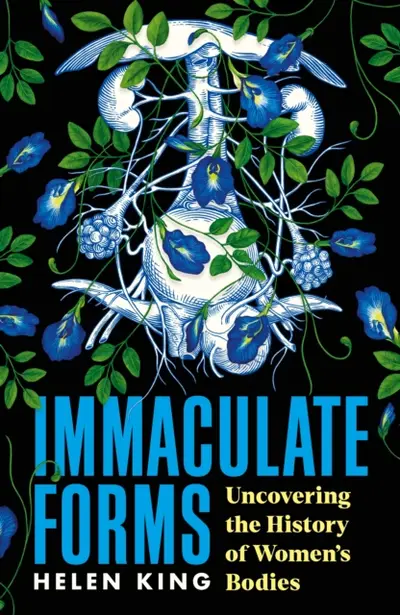
'Illuminating, thoughtful and scholarly' FINANCIAL TIMES'Does a fascinating job of exploring the history of women's bodies' GREG JENNER'Mind-blowing, fascinating stuff' BBC WOMAN'S HOUR'Authoritative, rich and wide-ranging, this is an immensely impressive work of scholarship' GUARDIANThroughout history, religious scholars, medical men and - occasionally - women themselves, have moulded thought on what 'makes' a woman. She has been called the weaker sex, the fairer sex, the purer sex, among many other monikers. Often, she has been defined simply as 'Not A Man'. Today, we are more aware than ever of the complex relationship between our bodies and our identities. But contrary to what some may believe, what makes a woman is a question that has always been open-ended. Immaculate Forms examines all the ways in which medicine and religion have played a gatekeeping role over women's organs. It explores how the womb was seen as both the most miraculous organ in the body and as a sewer; uncovers breasts' legacies as maternal or sexual organs - or both; probes the mystery of the disappearing hymen, and asks, did the clitoris need to be discovered at all?
Bibliographic data © Gardners Books Ltd.