PDF · English
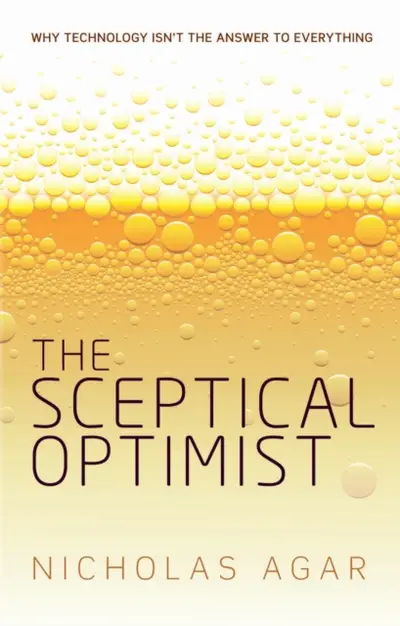
Sceptical Optimist
Why technology isn't the answer to everything
Price and availability
$18.99
Available in: Andorra, Austria, Australia, Belgium, Bulgaria, Canada, Switzerland, Cyprus, Czechia, Germany, Denmark, Estonia, Spain, Finland, France, United Kingdom, Guernsey, Greece, Croatia, Hungary, Ireland, Isle of Man, Iceland, Italy, Jersey, Japan, Liechtenstein, Lithuania, Luxembourg, Latvia, Monaco, Malta, Netherlands, Norway, Poland, Portugal, Romania, Sweden, Slovenia, Slovakia, San Marino, United States, Vatican City, South Africa
Stores: US, UK, Canada, EU, Australia.
Sign in to buyThe price is re-checked by the server before payment.
For personal use under the eBook licence.
- Format
- DRM
- Not stated by the publisher
- Language
- English
- Publisher
- Oxford University Press
- Published
- 9 July 2015
- ISBN
- 9780191026614
- Subjects
- Philosophy of science, Impact of science & technology on society, Popular science, Philosophy of science, Impact of science and technology on society, Popular science
About this book
The rapid developments in technologies -- especially computing and the advent of many 'smart' devices, as well as rapid and perpetual communication via the Internet -- has led to a frequently voiced view which Nicholas Agar describes as 'radical optimism'. Radical optimists claim that accelerating technical progress will soon end poverty, disease, and ignorance, and improve our happiness and well-being. Agar disputes the claim that technological progress will automatically produce great improvements in subjective well-being. He argues that radical optimism 'assigns to technological progress an undeserved pre-eminence among all the goals pursued by our civilization'. Instead, Agar uses the most recent psychological studies about human perceptions of well-being to create a realistic model of the impact technology will have. Although he accepts that technological advance does produce benefits, he insists that these are significantly less than those proposed by the radical optimists, and aspects of such progress can also pose a threat to values such as social justice and our relationship with nature, while problems such as poverty cannot be understood in technological terms. He concludes by arguing that a more realistic assessment of the benefits that technological advance can bring will allow us to better manage its risks in future.
Bibliographic data © Gardners Books Ltd.