PDF · English
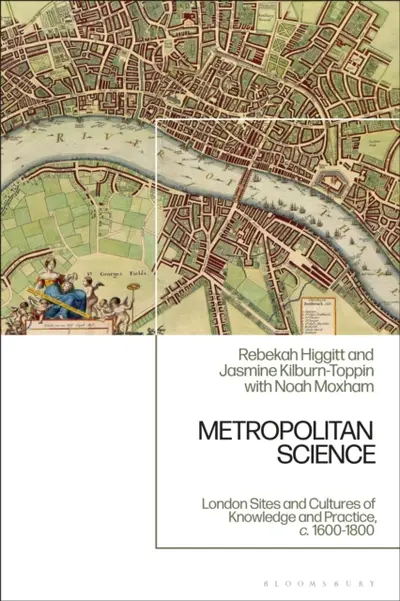
Metropolitan Science
London Sites and Cultures of Knowledge and Practice, c. 1600-1800
Price and availability
$35.99
Available in: Andorra, Austria, Australia, Belgium, Bulgaria, Canada, Switzerland, Cyprus, Czechia, Germany, Denmark, Estonia, Spain, Finland, France, United Kingdom, Guernsey, Greece, Croatia, Hungary, Ireland, Isle of Man, Iceland, Italy, Jersey, Japan, Liechtenstein, Lithuania, Luxembourg, Latvia, Monaco, Malta, Netherlands, Norway, Poland, Portugal, Romania, Sweden, Slovenia, Slovakia, San Marino, United States, Vatican City, South Africa
Stores: US, UK, Canada, EU, Australia.
Sign in to buyThe price is re-checked by the server before payment.
For personal use under the eBook licence.
- Format
- DRM
- Not stated by the publisher
- Language
- English
- Publisher
- Bloomsbury Publishing
- Published
- 22 August 2024
- Pages
- 240
- ISBN
- 9781350417045
- Subjects
- United Kingdom, Great Britain, London, Greater London, c 1600 to c 1700, c 1700 to c 1800, History of science, History of engineering & technology, 3MG, 3ML, History of science, History of engineering and technology
About this book
Exploring distinctive practices in the artisanal, mercantile, and governmental sites of London, Metropolitan Science offers a new perspective on the development of a scientific culture between the years 1600-1800.Beginning with the demographics of London in the 17th and 18th centuries, including its attraction of migrants, importance as a centre of empire, and the role of its institutions in government, the authors analyse how and why London was a unique site of scientific activity. Through the use of case studies, such as the Tower of London's Royal Mint, and the Livery Company Halls, this book examines the city's sites of exchange for knowledge and practice, and highlights the importance of both public and private spaces.With exploration of London's military and colonial history, the authors acknowledge how its port and maritime trade were not only central to growth and protection, but also facilitated the organisation, assessment, valuation, and pursuit of knowledge in the city. Ultimately, this book demonstrates that London corporations produced unique knowledge communities that drew on networks across the city and beyond, and uses a variety of spatial and material approaches to reveal the use, representation, and exchange of practice in these collective settings.
Bibliographic data © Gardners Books Ltd.