PDF · English
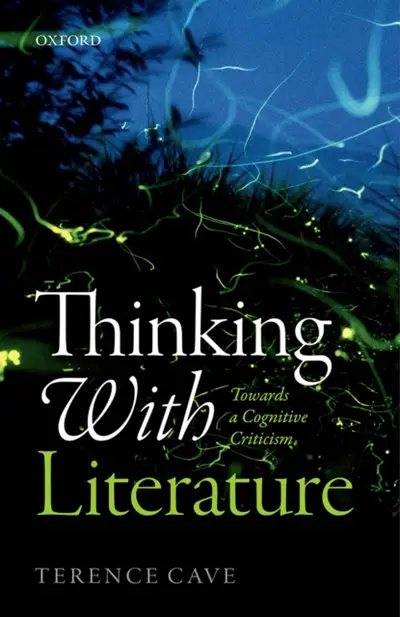
Thinking with Literature
Towards a Cognitive Criticism
Price and availability
$24.99
Available in: Andorra, Austria, Australia, Belgium, Bulgaria, Canada, Switzerland, Cyprus, Czechia, Germany, Denmark, Estonia, Spain, Finland, France, United Kingdom, Guernsey, Greece, Croatia, Hungary, Ireland, Isle of Man, Iceland, Italy, Jersey, Japan, Liechtenstein, Lithuania, Luxembourg, Latvia, Monaco, Malta, Netherlands, Norway, Poland, Portugal, Romania, Sweden, Slovenia, Slovakia, San Marino, United States, Vatican City, South Africa
Stores: US, UK, Canada, EU, Australia.
Sign in to buyThe price is re-checked by the server before payment.
For personal use under the eBook licence.
- Format
- DRM
- Not stated by the publisher
- Language
- English
- Publisher
- OUP Oxford
- Published
- 18 March 2016
- ISBN
- 9780191066368
- Subjects
- Literary theory, Literary studies: general, Cognitive science, Literary theory, Literary studies: general, Cognitive studies, Cognition and cognitive psychology
About this book
To speak of 'thinking with literature' is to make the assumption that literature (in the broadest sense) is neither a side-show nor a side-issue in human cultures: it belongs to the spectrum of imaginative modes that includes both philosophical and scientific thought. Whether one regards it as a practice or as an archive, literature is highly pervasive, robust, enduring, and pregnant with values. Thinking with Literature argues that what it affords above all is a way of thinking, whether for writer, reader, or critic. Literature constitutes one of the prime instruments of cultural improvisation; it is the embodiment of a powerful, inventive, and ever-changing cognitive agency. As such, it invites a cognitive mode of criticism, one which asserts the priority of the individual literary work as a unique product of human cognition. In this book, discussions of topics, arguments, and hypotheses from the cognitive sciences, philosophy, and the theory of communication are woven into the fabric of a critical analysis which insists on the value of close reading: a poem by Yeats, a scene from Shakespeare, novels by Mme de Lafayette, Conrad, Frantzen, stories from Winnie-the-Pooh, and many others appear here on their own terms, with their own cognitive energies. Written in an accessible style, Thinking with Literature speaks both to mainstream readers of literature and to specialists in cognitive studies.
Bibliographic data © Gardners Books Ltd.