PDF · English
After Violence
Transitional Justice, Peace, and Democracy
Price and availability
$78.99
Available in: Andorra, Austria, Australia, Belgium, Bulgaria, Canada, Switzerland, Cyprus, Czechia, Germany, Denmark, Estonia, Spain, Finland, France, United Kingdom, Guernsey, Greece, Croatia, Hungary, Ireland, Isle of Man, Iceland, Italy, Jersey, Japan, Liechtenstein, Lithuania, Luxembourg, Latvia, Monaco, Malta, Netherlands, Norway, Poland, Portugal, Romania, Sweden, Slovenia, Slovakia, San Marino, United States, Vatican City, South Africa
Stores: US, UK, Canada, EU, Australia.
Sign in to buyThe price is re-checked by the server before payment.
For personal use under the eBook licence.
- Format
- DRM
- Not stated by the publisher
- Language
- English
- Publisher
- Taylor & Francis
- Published
- 17 April 2015
- ISBN
- 9781317696919
- Subjects
- Peace studies & conflict resolution, Crime & criminology, Political structures: democracy, Political control & freedoms, Jurisprudence & general issues, Comparative law, Criminal law & procedure, Criminal justice law, Rwanda, Angola, Peru, Uruguay, Peace studies and conflict resolution, International relations, Public international law: human rights
About this book
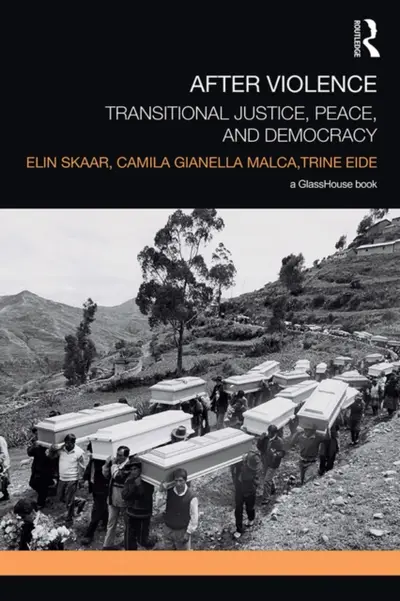
After Violence: Transitional Justice, Peace, and Democracy examines the effects of transitional justice on the development of peace and democracy. Anticipated contributions of transitional justice mechanisms are commonly stated in universal terms, with little regard for historically specific contexts. Yet a truth commission, for example, will not have the same function in a society torn by long-term civil war or genocide as in a society emerging from authoritarian repression. Addressing trials, reparations, truth commissions, and amnesties, the book systematically addresses the experiences of four very different contemporary transitional justice cases: post-authoritarian Uruguay and Peru and post-conflict Rwanda and Angola. Its analysis demonstrates that context is a crucial determinant of the impact of transitional justice processes, and identifies specific contextual obstacles and limitations to these processes. The book will be of much interest to scholars in the fields of transitional justice and peacebuilding, as well as students generally concerned with human rights and democratisation.
Bibliographic data © Gardners Books Ltd.