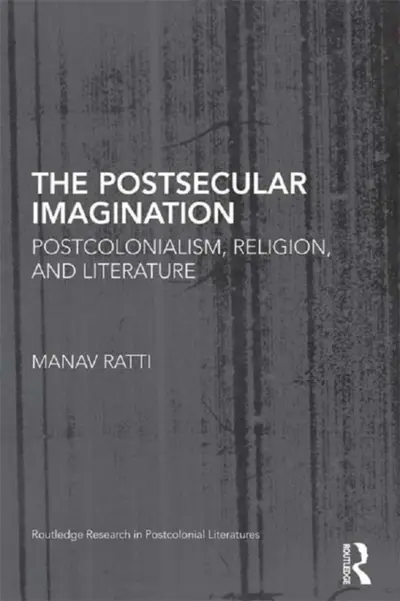
EPUB · English
Postsecular Imagination
Postcolonialism, Religion, and Literature
Price and availability
$83.99
Available in: Andorra, Austria, Australia, Belgium, Bulgaria, Canada, Switzerland, Cyprus, Czechia, Germany, Denmark, Estonia, Spain, Finland, France, United Kingdom, Guernsey, Greece, Croatia, Hungary, Ireland, Isle of Man, Iceland, Italy, Jersey, Japan, Liechtenstein, Lithuania, Luxembourg, Latvia, Monaco, Malta, Netherlands, Norway, Poland, Portugal, Romania, Sweden, Slovenia, Slovakia, San Marino, United States, Vatican City, South Africa
Stores: US, UK, Canada, EU, Australia.
Sign in to buyThe price is re-checked by the server before payment.
For personal use under the eBook licence.
- Format
- EPUB
- DRM
- Not stated by the publisher
- Language
- English
- Publisher
- Taylor & Francis
- Published
- 4 January 2013
- ISBN
- 9781135096892
- Subjects
- Modern Indic languages, Literary studies: general, Literary studies: post-colonial literature, Literary studies: fiction, novelists & prose writers, Religion & politics, Literary studies: fiction, novelists and prose writers, Religion and politics
About this book
The Postsecular Imagination presents a rich, interdisciplinary study of postsecularism as an affirmational political possibility emerging through the potentials and limits of both secular and religious thought. While secularism and religion can foster inspiration and creativity, they also can be linked with violence, civil war, partition, majoritarianism, and communalism, especially within the framework of the nation-state. Through close readings of novels that engage with animism, Buddhism, Christianity, Hinduism, Islam, and Sikhism, Manav Ratti examines how questions of ethics and the need for faith, awe, wonder, and enchantment can find expression and significance in the wake of such crises. While focusing on Michael Ondaatje and Salman Rushdie, Ratti addresses the work of several other writers as well, including Shauna Singh Baldwin, Mahasweta Devi, Amitav Ghosh, and Allan Sealy. Ratti shows the extent of courage and risk involved in the radical imagination of these postsecular works, examining how writers experiment with and gesture toward the compelling paradoxes of a non-secular secularism and a non-religious religion. Drawing on South Asian Anglophone literatures and postcolonial theory, and situating itself within the most provocative contemporary debates in secularism and religion, The Postsecular Imagination will be important for readers interested in the relations among culture, literature, theory, and politics.
Bibliographic data © Gardners Books Ltd.