PDF · English
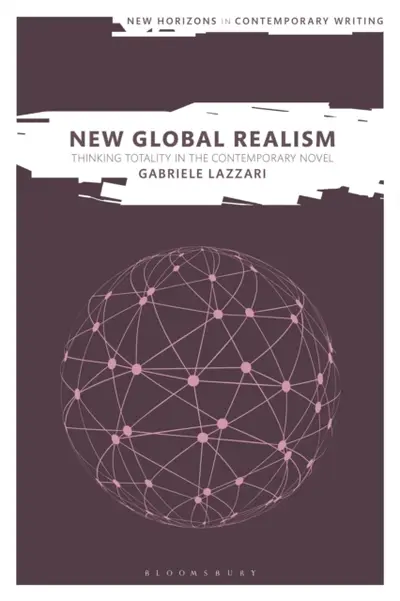
New Global Realism
Thinking Totality in the Contemporary Novel
Price and availability
$35.99
Available in: Andorra, Austria, Australia, Belgium, Bulgaria, Canada, Switzerland, Cyprus, Czechia, Germany, Denmark, Estonia, Spain, Finland, France, United Kingdom, Guernsey, Greece, Croatia, Hungary, Ireland, Isle of Man, Iceland, Italy, Jersey, Japan, Liechtenstein, Lithuania, Luxembourg, Latvia, Monaco, Malta, Netherlands, Norway, Poland, Portugal, Romania, Sweden, Slovenia, Slovakia, San Marino, United States, Vatican City, South Africa
Stores: US, UK, Canada, EU, Australia.
Sign in to buyThe price is re-checked by the server before payment.
For personal use under the eBook licence.
- Format
- DRM
- Not stated by the publisher
- Language
- English
- Publisher
- Bloomsbury Publishing
- Published
- 22 August 2024
- Pages
- 240
- ISBN
- 9781350385689
- Subjects
- United Kingdom, Great Britain, Southern Europe, Italian, Literary studies: from c 1900 -, Literary studies: fiction, novelists & prose writers, Italian, Literary studies: c 1900 to c 2000, Literary studies: fiction, novelists and prose writers
About this book
Shortlisted for the BACLS Monograph Prize 2025A comparative study of contemporary realist novels that employ totality as a method and a formal principle to represent the social and economic inequalities of the present, this book examines writing in English, Italian, Kannada, and Spanish by authors from Zimbabwe, Ghana, Italy, India and Mexico.By theorizing four modalities of totalization employed by contemporary realist writers, this book explores the current resurgence of realism and challenges critical approaches that consider it naive or formally unsophisticated. Instead, it argues that realist novels offer a self-conscious and serious representation of the world we inhabit while actively envisioning new social designs and political configurations. Through comparative studies of novels by Fernanda Melchor, NoViolet Bulawayo, Vivek Shanbhag, Nicola Lagioia, Igiaba Scego, Yaa Gyasi and Roberto Bola o, this book further explains why realism can be a powerful antidote to the skepticism about the possibility of making truth-claims in humanist research.
Bibliographic data © Gardners Books Ltd.