PDF · English
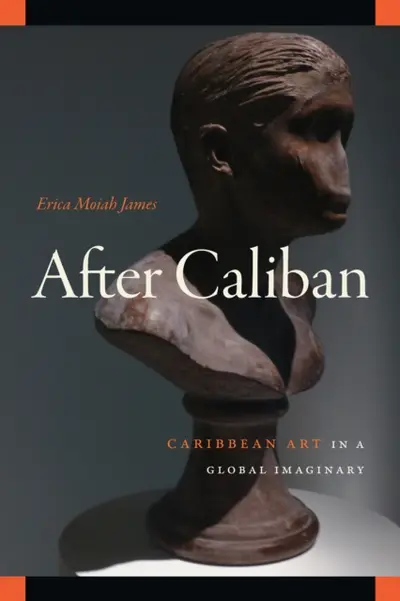
After Caliban
Caribbean Art in a Global Imaginary
Price and availability
$45.99
Available in: Andorra, Austria, Australia, Belgium, Bulgaria, Canada, Switzerland, Cyprus, Czechia, Germany, Denmark, Estonia, Spain, Finland, France, United Kingdom, Guernsey, Greece, Croatia, Hungary, Ireland, Isle of Man, Iceland, Italy, Jersey, Japan, Liechtenstein, Lithuania, Luxembourg, Latvia, Monaco, Malta, Netherlands, Norway, Poland, Portugal, Romania, Sweden, Slovenia, Slovakia, San Marino, United States, Vatican City, South Africa
Stores: US, UK, Canada, EU, Australia.
Sign in to buyThe price is re-checked by the server before payment.
For personal use under the eBook licence.
- Format
- DRM
- Not stated by the publisher
- Language
- English
- Publisher
- Duke University Press
- Published
- 1 August 2025
- ISBN
- 9781478061069
- Subjects
- Caribbean islands, c 1990 to c 2000, History of art & design styles: from c 1900 -, Art & design styles: from c 1960, Ethnic minorities & multicultural studies, Black & Asian studies, Caribbean islands, 3MPQZ, AGA, JBSL, JBSL1
About this book
In After Caliban, Erica Moiah James examines the rise of global Caribbean artists in the 1990s and their production of a decolonized art history for the Caribbean. She draws on Aime Cesaire's rewriting of Shakespeare's The Tempest, in which Caliban becomes the sole author of his own story, dissolving his fixed position as colonized in relation to Prospero as colonizer. James shows how visual artists such as Marc Latamie, Janine Antoni, Belkis Ayon, Edouard Duval-Carrie, and Christopher Cozier followed Cesaire's model by employing a range of practices and methodologies that refused marginalization. Just as Cesaire decolonized The Tempest, so too did these artists, who crafted a decolonial aesthetic that redefined their own cultural and historical narratives and positioned art as a key pathway toward a postcolonial future. By providing the foundation for a postcolonial, post-Caliban art world, these artists redefined the critical and popular notion of contemporary Caribbean art. At the same time, James argues, they fulfilled Cesaire's dream for a postcolonial Caribbean while creating a nonhegemonic art historical practice that exists beyond modern binaries and borders.
Bibliographic data © Gardners Books Ltd.