PDF · English
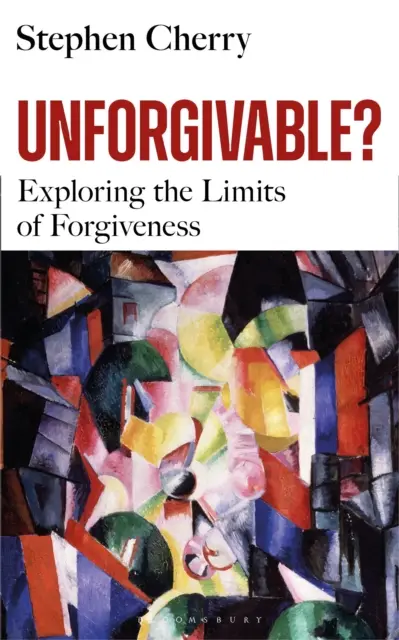
Unforgivable?
Exploring the Limits of Forgiveness
Price and availability
$16.99
Available in: Andorra, Austria, Australia, Belgium, Bulgaria, Canada, Switzerland, Cyprus, Czechia, Germany, Denmark, Estonia, Spain, Finland, France, United Kingdom, Guernsey, Greece, Croatia, Hungary, Ireland, Isle of Man, Iceland, Italy, Jersey, Japan, Liechtenstein, Lithuania, Luxembourg, Latvia, Monaco, Malta, Netherlands, Norway, Poland, Portugal, Romania, Sweden, Slovenia, Slovakia, San Marino, United States, Vatican City, South Africa
Stores: US, UK, Canada, EU, Australia.
Sign in to buyThe price is re-checked by the server before payment.
For personal use under the eBook licence.
- Format
- DRM
- Not stated by the publisher
- Language
- English
- Publisher
- Bloomsbury Publishing
- Published
- 28 March 2024
- Pages
- 240
- ISBN
- 9781399401302
- Subjects
- Ethics & moral philosophy, Religion & politics, Christian social thought & activity, Ethical issues & debates, Religious groups: social & cultural aspects, JBFV, JBSR, QDTQ, QRAM2, QRM
About this book
Forgiveness is a lovely idea, wrote C. S. Lewis, and in recent decades it has been seen and admired in situations ranging from therapy to politics, and proposed as a constructive pathway in the aftermath of abuse and atrocity. Not everyone is impressed, however, and in parallel with praise and promotion of forgiveness, cries of 'unforgivable' are uttered with increased shrillness and frequency. In this hugely compelling, wide-ranging, and thought-provoking book, Stephen Cherry argues that while forgiveness can be transformative in the aftermath of harm, it can also, if not handled with care, become an additional pressure and anxiety for those who have been harmed. He teases out the way in which Christian understandings often lie behind pressure to forgive, identifying a number of typical mistakes with the Christian approach to forgiveness. Reflecting on many examples from real life as well as literature, and on the insights of psychologists and philosophers, Cherry uses the tension between the desire to forgive and the protest that a person is unforgivable to push towards understandings of forgiveness that avoid the harshness of binary models. Forgiveness is not, he insists, the only good way forward after harm. A positive understanding of non-vengeful unforgiveness is vital if the harmed are to be given the care and support they need and deserve, and if forgiveness itself is to be authentic and liberating. Cherry's challenging book brims with energy and blends human insight with intellectual vision. It argues that if forgiveness is to play a part in the aftermath of harm without inflicting further harm it must be presented in a non-idealized way and only following acknowledgement of the depth of the human impact of the harm done.
Bibliographic data © Gardners Books Ltd.