PDF · English
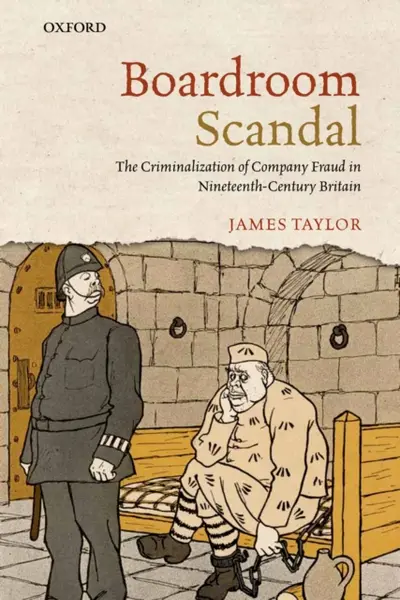
Boardroom Scandal
The Criminalization of Company Fraud in Nineteenth-Century Britain
Price and availability
$122.99
Available in: Andorra, Austria, Australia, Belgium, Bulgaria, Canada, Switzerland, Cyprus, Czechia, Germany, Denmark, Estonia, Spain, Finland, France, United Kingdom, Guernsey, Greece, Croatia, Hungary, Ireland, Isle of Man, Iceland, Italy, Jersey, Japan, Liechtenstein, Lithuania, Luxembourg, Latvia, Monaco, Malta, Netherlands, Norway, Poland, Portugal, Romania, Sweden, Slovenia, Slovakia, San Marino, United States, Vatican City, South Africa
Stores: US, UK, Canada, EU, Australia.
Sign in to buyThe price is re-checked by the server before payment.
For personal use under the eBook licence.
- Format
- DRM
- Not stated by the publisher
- Language
- English
- Publisher
- Oxford University Press
- Published
- 25 April 2013
- ISBN
- 9780191649196
- Subjects
- United Kingdom, Great Britain, c 1800 to c 1900, British & Irish history, Modern history to 20th century: c 1700 to c 1900, Economic history, Fraud, Economic history, Fraud, European history
About this book
Should businessmen who commit fraud go to prison? This question has been asked repeatedly since 2008. It was also raised in nineteenth-century Britain when the spread of corporate capitalism created enormous new opportunities for dishonesty. Historians have presented Victorian Britain as a haven for white-collar criminals, beneficiaries of a prejudiced criminal justice system which only dealt harshly with offences by the poor. Boardroom Scandal challenges these beliefs. Based on an unparalleled sample of legal cases - many examined here for the first time - James Taylor presents a radical new interpretation of the relationship between capitalism and the law. Initially, there were no criminal sanctions against publishing false prospectuses, concealing losses in balance sheets, and even misappropriating company money. But parliament became convinced of the need to criminalize these practices to protect the culture of stock market investment on which mid-Victorian prosperity increasingly rested. Persuading judges to play along was harder, with many invoking the principle of caveat emptor to exonerate defendants. But by the end of the century, successful prosecutions of company executives were commonplace. These trials performed multiple functions: they stabilized confidence in times of crisis; they dramatized the class blindness of the law; and they were increasingly seen as essential as faith in a self-regulating economy ebbed. The criminalization of fraud, therefore, has far-reaching implications for our understanding of nineteenth-century Britain. It also has relevance today in light of the on-going economic crisis and the issues it raises regarding business ethics and the role of the state.
Bibliographic data © Gardners Books Ltd.