EPUB · English
Mourning the Unborn Dead
A Buddhist Ritual Comes to America
Price and availability
$54.99
Available in: Andorra, Austria, Australia, Belgium, Bulgaria, Canada, Switzerland, Cyprus, Czechia, Germany, Denmark, Estonia, Spain, Finland, France, United Kingdom, Guernsey, Greece, Croatia, Hungary, Ireland, Isle of Man, Iceland, Italy, Jersey, Japan, Liechtenstein, Lithuania, Luxembourg, Latvia, Monaco, Malta, Netherlands, Norway, Poland, Portugal, Romania, Sweden, Slovenia, Slovakia, San Marino, United States, Vatican City, South Africa
Stores: US, UK, Canada, EU, Australia.
Sign in to buyThe price is re-checked by the server before payment.
For personal use under the eBook licence.
- Format
- EPUB
- DRM
- Not stated by the publisher
- Language
- English
- Publisher
- Oxford University Press
- Published
- 21 January 2009
- ISBN
- 9780190451660
- Subjects
- Buddhist worship, rites & ceremonies, QRF
About this book
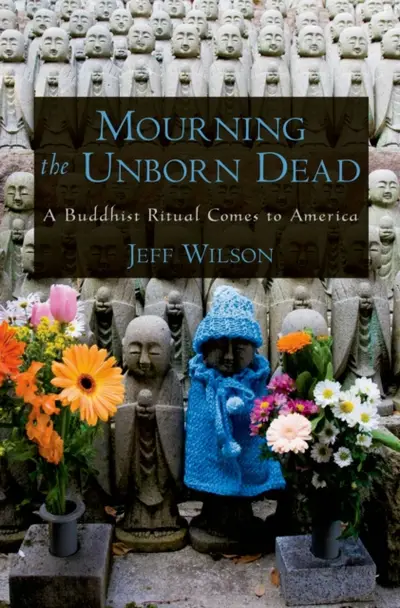
Many Western visitors to Japan have been struck by the numerous cemeteries for aborted fetuses, which are characterized by throngs of images of the Bodhisattva Jizo, usually dressed in red baby aprons or other baby garments, and each dedicated to an individual fetus. Abortion is common in Japan and as a consequence one of the frequently performed rituals in Japanese Buddhism is mizuko-kuyo, a ceremony for aborted and miscarried fetuses. Over the past forty years, mizuko-kuyo has gradually come to America, where it has been appropriated by non-Buddhists as well as Buddhist practitioners. In this book, Jeff Wilson examines how and why Americans of different backgrounds have brought knowledge and performance of this Japanese ceremony to the United States. Drawing on his own extensive fieldwork in Japan and the U.S., as well as the literature in both Japanese and English, Wilson shows that the meaning and purpose of the ritual have changed greatly in the American context. In Japan, mizuko-kuyo is performed to placate the potentially dangerous spirit of the angry fetus. In America, however, it has come to be seen as a way for the mother to mourn and receive solace for her loss. Many American women who learn about mizuko-kuyo are struck by the lack of such a ceremony and see it as filling a very important need. Ceremonies are now performed even for losses that took place many years ago. Wilson's well-written study not only contributes to the growing literature on American Buddhism, but sheds light on a range of significant issues in Buddhist studies, interreligious contact, women's studies, and even bioethics.
Bibliographic data © Gardners Books Ltd.