PDF · English
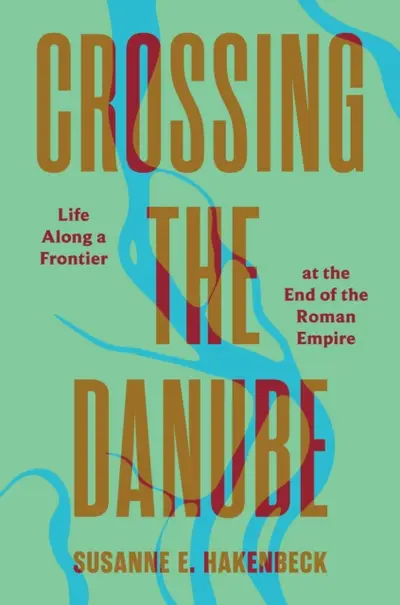
Crossing the Danube
Life Along a Frontier at the End of the Roman Empire
Price and availability
$47.99
Not available to buy yet.
Available in: Andorra, Austria, Australia, Belgium, Bulgaria, Canada, Switzerland, Cyprus, Czechia, Germany, Denmark, Estonia, Spain, Finland, France, United Kingdom, Guernsey, Greece, Croatia, Hungary, Ireland, Isle of Man, Iceland, Italy, Jersey, Japan, Liechtenstein, Lithuania, Luxembourg, Latvia, Monaco, Malta, Netherlands, Norway, Poland, Portugal, Romania, Sweden, Slovenia, Slovakia, San Marino, United States, Vatican City, South Africa
Stores: US, UK, Canada, EU, Australia.
This title cannot be bought in this store yet: its supplier terms, territorial rights or price are still being confirmed.
For personal use under the eBook licence.
- Format
- DRM
- Not stated by the publisher
- Language
- English
- Publisher
- Princeton University Press
- Published
- 17 November 2026
- ISBN
- 9780691289236
- Subjects
- Europe, Ancient Rome, BCE to c 500 CE, History, European history, Classical history / classical civilisation, Social & cultural history, Archaeology, Danube river and tributaries, Ancient Rome, History and Archaeology, European history: the Romans, Social and cultural history
About this book
A richly illustrated history that reveals how the peoples living along the Danube frontier helped transform the Roman EmpireCrossing the Danube offers a new account of the peoples who lived along Europe's greatest riverthe nearly 2,000-mile-long Danubeduring the dramatic centuries leading up to the end of the Roman Empire in the West. Written sources of this period are dominated by accounts of Rome's struggle against the ';barbarians' along the Danube, which marked the border between the empire and the lands beyond, and the crossing of the river by Gothic refugees escaping the Huns in 376 CE was long seen as a catalyst of Rome's fall. But, as Susanne Hakenbeck shows, that is not the whole story. The Danube was not only a political boundary, but a living landscape. Using archaeological evidence, she traces four tumultuous centuries along the river through the material world of the people who lived there.Crossing the Danube describes how ordinary people and local elites navigated, exploited, and ultimately transformed the Roman frontier. It tells how generations of interactionsthrough diplomacy, trading, raiding, and recruitment into the Roman armybound the empire and the people beyond the frontier together. By the fifth century, former ';barbarians' embraced the trappings of Roman imperial power and moved toward full political participation. In doing so, the people from beyond the Danube ended up fracturing the empire.Sweeping in scope yet rich in detail, Crossing the Danube overturns longstanding myths about the role of the so-called barbarians in Rome's collapse.
Bibliographic data © Gardners Books Ltd.