PDF · English
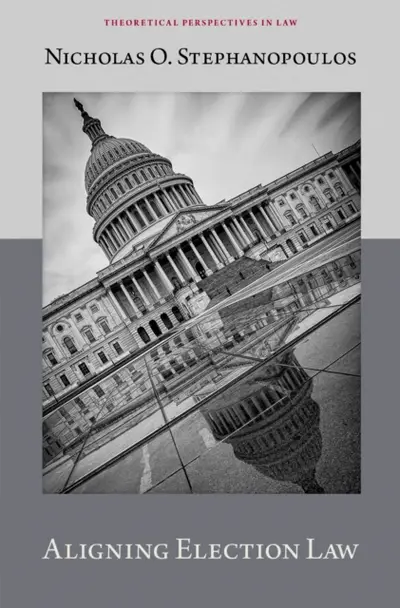
Aligning Election Law
Price and availability
$29.99
Available in: Andorra, Austria, Australia, Belgium, Bulgaria, Canada, Switzerland, Cyprus, Czechia, Germany, Denmark, Estonia, Spain, Finland, France, United Kingdom, Guernsey, Greece, Croatia, Hungary, Ireland, Isle of Man, Iceland, Italy, Jersey, Japan, Liechtenstein, Lithuania, Luxembourg, Latvia, Monaco, Malta, Netherlands, Norway, Poland, Portugal, Romania, Sweden, Slovenia, Slovakia, San Marino, United States, Vatican City, South Africa
Stores: US, UK, Canada, EU, Australia.
Sign in to buyThe price is re-checked by the server before payment.
For personal use under the eBook licence.
- Format
- DRM
- Not stated by the publisher
- Language
- English
- Publisher
- Oxford University Press
- Published
- 6 September 2024
- ISBN
- 9780197662168
- Subjects
- Constitutional & administrative law, Election law, Local government law, Constitutional and administrative law: general, Election law, Local government law
About this book
Alignment between governmental outputs and popular preferences is a core democratic value. For the people genuinely to rule, their government should heed their wishes. Yet alignment is not appreciated by election law scholarship, much of which focuses on other democratic goals. Nor do the courts consider alignment when deciding election law cases. Aligning Election Law fills this gap, providing a new theoretical perspective on election law and showing how alignment theory would operate in practice, in both litigation and legislation. Nicholas O. Stephanopoulos examines alignment from a variety of angles, including its democratic value, its place in legal doctrine, its rarity in modern American politics, and its application to particular election law topics. The book also engages with issues facing American constitutional law and society, including voting restrictions, political parties, partisan gerrymandering, minority representation, and campaign finance, and how alignment theory would tackle these. The book's orientation is normative, suggesting how judicial (and nonjudicial) institutions should approach electoral regulations, not how they have addressed them in the past. By thoroughly canvassing the democratic theory, empirical political science, and election law literatures, the book argues that alignment should be a tenet of the law of democracy. Accordingly, Aligning Election Law will be valuable not just to scholars, students, and practitioners of election law, but to anyone wishing to understand how the law of democracy could better achieve the values of democracy.
Bibliographic data © Gardners Books Ltd.