EPUB · English
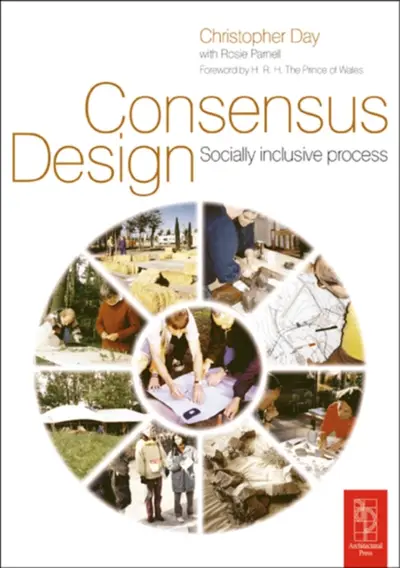
Consensus Design
Price and availability
$66.99
Available in: Andorra, Austria, Australia, Belgium, Bulgaria, Canada, Switzerland, Cyprus, Czechia, Germany, Denmark, Estonia, Spain, Finland, France, United Kingdom, Guernsey, Greece, Croatia, Hungary, Ireland, Isle of Man, Iceland, Italy, Jersey, Japan, Liechtenstein, Lithuania, Luxembourg, Latvia, Monaco, Malta, Netherlands, Norway, Poland, Portugal, Romania, Sweden, Slovenia, Slovakia, San Marino, United States, Vatican City, South Africa
Stores: US, UK, Canada, EU, Australia.
Sign in to buyThe price is re-checked by the server before payment.
For personal use under the eBook licence.
- Format
- EPUB
- DRM
- Not stated by the publisher
- Language
- English
- Publisher
- Taylor & Francis
- Published
- 7 June 2007
- ISBN
- 9781136415579
- Subjects
- Theory of architecture, Architectural structure & design, Environmentally-friendly architecture & design, Architecture: professional practice, Civil engineering, surveying & building, Architecture: professional practice, Project management
About this book
Consensus Design offers a practical step by step guide to co-design; an increasingly important consideration for architects as they compete for work. The text moves from identifying the methodology of the process to developing a series of principles and practical steps which illustrate how consensus design can be established. For easy reference, flow charts show the process of achieving consensus design and include variations for different types of project and different groups of people. It gives clear timings so that agreements can be reached within a specific time frame, and also features a number of case studies to illustrate consensus design principles in practice. Case studies include projects in the UK, US, and Sweden. Consensus design isn't just a utopian ideal. It's the only meaningful way in which people can be involved in shaping where they live and work. It can have an influence on social stability, crime-reduction, personal health and building longevity, all of which in turn have monetary and environmental cost implications. Its consideration can also greatly help architects win work and commissions. Day argues that when places are designed by professionals for people, many things obvious to the residents are overlooked. When they are designed by lay people, the design can suffer from the lowest common denominator factor. When places are designed by both it tends to end up in conflict. However, Consensus Design shows that co-design is not doomed to either conflict or banality if it is managed correctly.
Bibliographic data © Gardners Books Ltd.