EPUB · English
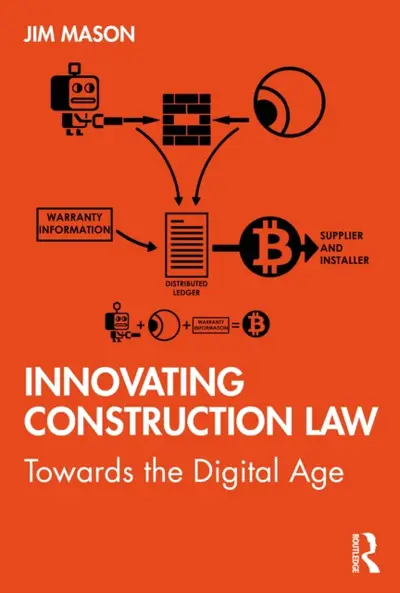
Innovating Construction Law
Towards the Digital Age
Price and availability
$72.99
Available in: Andorra, Austria, Australia, Belgium, Bulgaria, Canada, Switzerland, Cyprus, Czechia, Germany, Denmark, Estonia, Spain, Finland, France, United Kingdom, Guernsey, Greece, Croatia, Hungary, Ireland, Isle of Man, Iceland, Italy, Jersey, Japan, Liechtenstein, Lithuania, Luxembourg, Latvia, Monaco, Malta, Netherlands, Norway, Poland, Portugal, Romania, Sweden, Slovenia, Slovakia, San Marino, United States, Vatican City, South Africa
Stores: US, UK, Canada, EU, Australia.
Sign in to buyThe price is re-checked by the server before payment.
For personal use under the eBook licence.
- Format
- EPUB
- DRM
- Not stated by the publisher
- Language
- English
- Publisher
- CRC Press
- Published
- 25 February 2021
- ISBN
- 9781000329094
- Subjects
- Laws of Specific jurisdictions, Construction & engineering law, Building construction & materials, Laws of specific jurisdictions and specific areas of law, Construction and engineering law, Building construction and materials
About this book
Innovating Construction Law: Towards the Digital Age takes a speculative look at current and emerging technologies and examines how legal practice in the construction industry can best engage with the landscape they represent. The book builds the case for a legal approach based on transparency, traceability and collaboration in order to seize the opportunities presented by technologies such as smart contracts, blockchain, artificial intelligence, big data and building information modelling. The benefits these initiatives bring to the construction sector have the potential to provide economic, societal and environmental benefits as well as reducing the incidence of disputes.The author uses a mixture of black letter law and socio-legal commentary to facilitate the discourse around procurement, law and technology. The sections of the book cover the AS IS position, the TO BE future position as predicted and the STEPS INBETWEEN, which can enable a real change in the industry. The rationale for this approach lies in ensuring that the developments are congruent with the existing frameworks provided by the law. The book proposes various steps that the industry should seriously consider taking from the current position to shape the future of the sector and ultimately create a better, more productive and sustainable construction industry.This book is a readable and engaging guide for students and practitioners looking to learn more about construction law and its relationship with technology and for those seeking a platform for graduate studies in this area.
Bibliographic data © Gardners Books Ltd.