PDF · English
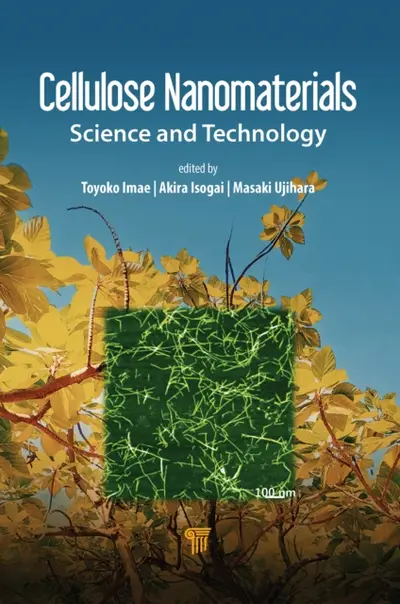
Cellulose Nanomaterials
Science and Technology
Price and availability
$260.99
Available in: Andorra, Austria, Australia, Belgium, Bulgaria, Canada, Switzerland, Cyprus, Czechia, Germany, Denmark, Estonia, Spain, Finland, France, United Kingdom, Guernsey, Greece, Croatia, Hungary, Ireland, Isle of Man, Iceland, Italy, Jersey, Japan, Liechtenstein, Lithuania, Luxembourg, Latvia, Monaco, Malta, Netherlands, Norway, Poland, Portugal, Romania, Sweden, Slovenia, Slovakia, San Marino, United States, Vatican City, South Africa
Stores: US, UK, Canada, EU, Australia.
Sign in to buyThe price is re-checked by the server before payment.
For personal use under the eBook licence.
- Format
- DRM
- Not stated by the publisher
- Language
- English
- Publisher
- Taylor and Francis Group
- Published
- 16 June 2026
- ISBN
- 9781040948736
- Subjects
- Polymer chemistry, Nanotechnology, Plastics & polymers technology, Mechanical engineering, Materials science, Chemistry, Materials science
About this book
In todays world, where achieving carbon neutrality and being microplastic-free is imperative, the pursuit of renewable and sustainable materials has become essential. Cellulose nanomaterials (CNs), including cellulose nanofibers (CNFs) and cellulose nanocrystals (CNCs), are nanoscaled materials derived from industrial cellulose fibers (such as paper and dissolving pulps), abundant plants, and other cellulose resources. They are typically produced in water, with or without pretreatment, through downsizing or mechanical fibrillation. CNs retain their original crystal structures, which confer high mechanical strengths and thermal stabilities. In addition, they provide abundant reaction sites for further functionalization, enabling the incorporation of unique properties, such as catalytic activities, anti-microbial effects, hydrophobicity, water resistance, and gas-barrier performance, as well as electronic and thermal functionalities. Thus, CNs represent promising bio-nanomaterials that are biocompatible, biodegradable, sustainable, and renewable. They are abundantly produced by plants through biosynthesis, utilizing atmospheric CO2 and water as primary resources. This book provides a comprehensive overview of CNs, covering their history, chemical structures, morphologies, characteristics, and applications. CNs are expected to be used in food and daily necessities as well as medical, luminescent, electronic, and electrical materials. The book serves as a comprehensive resource not only for university students and researchers, but also for companies and their affiliated engineers as well as for anyone interested in advancing research and developing practical applications of CNs.
Bibliographic data © Gardners Books Ltd.