PDF · English
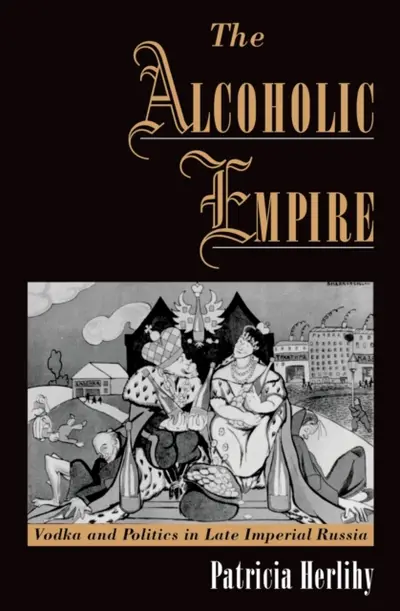
Alcoholic Empire
Vodka & Politics in Late Imperial Russia
Price and availability
$39.99
Available in: Andorra, Austria, Australia, Belgium, Bulgaria, Canada, Switzerland, Cyprus, Czechia, Germany, Denmark, Estonia, Spain, Finland, France, United Kingdom, Guernsey, Greece, Croatia, Hungary, Ireland, Isle of Man, Iceland, Italy, Jersey, Japan, Liechtenstein, Lithuania, Luxembourg, Latvia, Monaco, Malta, Netherlands, Norway, Poland, Portugal, Romania, Sweden, Slovenia, Slovakia, San Marino, United States, Vatican City, South Africa
Stores: US, UK, Canada, EU, Australia.
Sign in to buyThe price is re-checked by the server before payment.
For personal use under the eBook licence.
- Format
- DRM
- Not stated by the publisher
- Language
- English
- Publisher
- Oxford University Press
- Published
- 6 December 2001
- ISBN
- 9780195350739
- Subjects
- Russia, c 1800 to c 1900, 20th century, European history, Modern history to 20th century: c 1700 to c 1900, 20th century history: c 1900 to c 2000, Revolutions, uprisings, rebellions, Illness & addiction: social aspects, Revolutionary groups & movements, 3MN, 3MP, JBFN, Revolutionary groups and movements, NH, NHD, NHTV
About this book
The Alcoholic Empire examines the prevalence of alcohol in Russian social, economic, religious, and political life. Herlihy looks at how the state, the church, the military, doctors, lay societies, and the czar all tried to battle the problem of overconsumption of alcohol in the late imperial period. Since vodka produced essential government revenue and was a backbone of the state economy, many who fought for a sober Russia believed that the only way to save the country through Revolutionary change. This book traces temperance activity and politics side by side with the end of the tsarist regime, while showing how the problem of alcohoism continued to pervade Soviet and post-Soviet society. Illustrated by timeless and incisive sayings about the Russian love of vodka and by poster art and paintings, this book will appeal to Russian and European historians and those interested in temperance history.
Bibliographic data © Gardners Books Ltd.