PDF · English
Man Behind the Cane
Preston Brooks, Political Violence, and the Road to the Civil War
Price and availability
$30.99
Available in: Andorra, Austria, Australia, Belgium, Bulgaria, Canada, Switzerland, Cyprus, Czechia, Germany, Denmark, Estonia, Spain, Finland, France, United Kingdom, Guernsey, Greece, Croatia, Hungary, Ireland, Isle of Man, Iceland, Italy, Jersey, Japan, Liechtenstein, Lithuania, Luxembourg, Latvia, Monaco, Malta, Netherlands, Norway, Poland, Portugal, Romania, Sweden, Slovenia, Slovakia, San Marino, United States, Vatican City, South Africa
Stores: US, UK, Canada, EU, Australia.
Sign in to buyThe price is re-checked by the server before payment.
For personal use under the eBook licence.
- Format
- DRM
- Not stated by the publisher
- Language
- English
- Publisher
- Oxford University Press
- Published
- 20 April 2026
- ISBN
- 9780197667279
- Subjects
- USA, c 1800 to c 1900, Biography: historical, political & military, History of the Americas, Early modern history: c 1450/1500 to c 1700, Modern history to 20th century: c 1700 to c 1900, Military history, American Civil War, United States of America, USA, 3MN, DNBH, NH, NHK, NHW, NHWR3
About this book
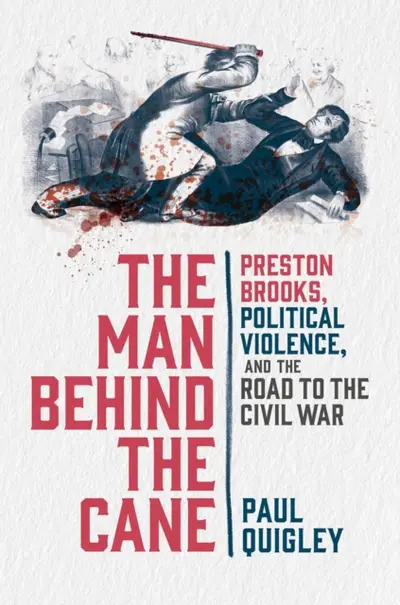
A new perspective on the life of the US politician best known for the infamous assault that paved the bloody road to the Civil War. In 1856, South Carolina Congressman Preston Brooks assaulted Massachusetts Senator Charles Sumner with a cane in the US Capitol, defending his family's honor and the rights of slaveholders. In beating Sumner unconscious, Brooks fueled a nationwide clash over slavery that ended in civil war. Southern historian Paul Quigley brings Brooks to life more vividly than ever before, revealing how his personal struggles shaped the fateful decision to attack Sumner. Raised in the slaveholding culture of honor and scarred by missed opportunities for glory in the Mexican-American War, Brooks came to believe in the redemptive power of violence. Blending intimate personal history with wide-ranging analysis of political debates, Quigley uses Brooks's life to examine the deeper currents propelling the United States to the brink of destruction. Brooks's story reveals the increasingly fraught relationship between words and violence: When did words such as "e;liar"e; or "e;coward"e; justify duels? Did abolitionists' verbal attacks on slaveholders warrant physical retaliation? How did the way Americans talked about violence affect the likelihood that it would occur? With the caning, Brooks sparked an ominous national debate over the righteousness of bloodshed in a polarized nation. Examining enduring issues of masculinity, honor, and free speech, The Man Behind the Cane shows how words and violent behavior became perilously entangled in the fight over slavery and casts new light on the origins of the Civil War-and the ongoing dangers of political violence in our own time.
Bibliographic data © Gardners Books Ltd.