PDF · English
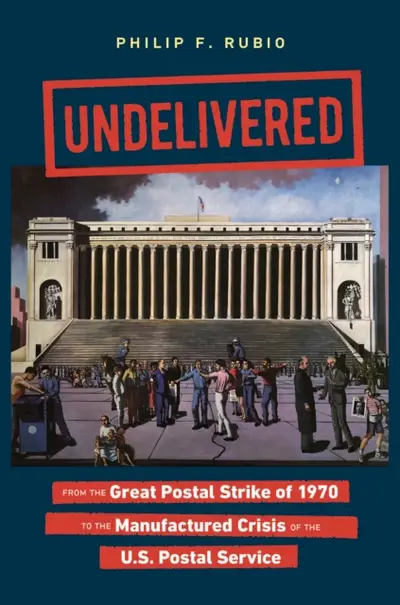
Undelivered
From the Great Postal Strike of 1970 to the Manufactured Crisis of the U.S. Postal Service
Price and availability
$155.99
Available in: Andorra, Austria, Australia, Belgium, Bulgaria, Canada, Switzerland, Cyprus, Czechia, Germany, Denmark, Estonia, Spain, Finland, France, United Kingdom, Guernsey, Greece, Croatia, Hungary, Ireland, Isle of Man, Iceland, Italy, Jersey, Japan, Liechtenstein, Lithuania, Luxembourg, Latvia, Monaco, Malta, Netherlands, Norway, Poland, Portugal, Romania, Sweden, Slovenia, Slovakia, San Marino, United States, Vatican City, South Africa
Stores: US, UK, Canada, EU, Australia.
Sign in to buyThe price is re-checked by the server before payment.
For personal use under the eBook licence.
- Format
- DRM
- Not stated by the publisher
- Language
- English
- Publisher
- The University of North Carolina Press
- Published
- 11 May 2020
- ISBN
- 9781469655482
- Subjects
- USA, History of the Americas, Labour economics, Personnel & human resources management, Industrial relations, Strikes, United States of America, USA, Labour / income economics, Industrial relations, occupational health and safety, Industrial arbitration and negotiation, Trade unions, History of the Americas
About this book
For eight days in March 1970, over 200,000 postal workers staged an illegal “wildcat” strike — the largest in United States history — for better wages and working conditions. Picket lines started in New York and spread across the country like wildfire. Strikers defied court injunctions, threats of termination, and their own union leaders. In the negotiated aftermath, the U.S. Post Office became the U.S. Postal Service, and postal workers received full collective bargaining rights and wage increases, all the while continuing to fight for greater democracy within their unions.Using archives, periodicals, and oral histories, Philip Rubio shows how this strike, born of frustration and rising expectations and emerging as part of a larger 1960s-1970s global rank-and-file labor upsurge, transformed the post office and postal unions. It also led to fifty years of clashes between postal unions and management over wages, speedup, privatization, automation, and service. Rubio revives the 1970 strike story and connects it to today’s postal financial crisis that threatens the future of a vital 245-year-old public communications institution and its labor unions.
Bibliographic data © Gardners Books Ltd.