EPUB · English
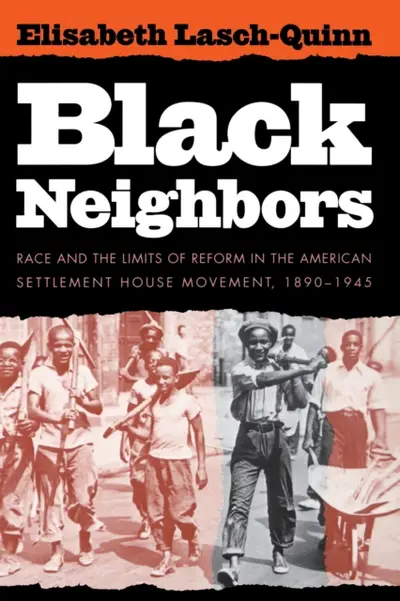
Black Neighbors
Race and the Limits of Reform in the American Settlement House Movement, 1890-1945
Price and availability
$31.99
Available in: Andorra, Austria, Australia, Belgium, Bulgaria, Canada, Switzerland, Cyprus, Czechia, Germany, Denmark, Estonia, Spain, Finland, France, United Kingdom, Guernsey, Greece, Croatia, Hungary, Ireland, Isle of Man, Iceland, Italy, Jersey, Japan, Liechtenstein, Lithuania, Luxembourg, Latvia, Monaco, Malta, Netherlands, Norway, Poland, Portugal, Romania, Sweden, Slovenia, Slovakia, San Marino, United States, Vatican City, South Africa
Stores: US, UK, Canada, EU, Australia.
Sign in to buyThe price is re-checked by the server before payment.
For personal use under the eBook licence.
- Format
- EPUB
- DRM
- Not stated by the publisher
- Language
- English
- Publisher
- The University of North Carolina Press
- Published
- 6 October 2017
- ISBN
- 9781469621494
- Subjects
- USA, History of the Americas, Social & cultural history, Black & Asian studies, Sociology & anthropology, United States of America, USA, Ethnic studies / Ethnicity, History of the Americas, Social and cultural history
About this book
Professing a policy of cultural and social integration, the American settlement house movement made early progress in helping immigrants adjust to life in American cities. However, when African Americans migrating from the rural South in the early twentieth century began to replace white immigrants in settlement environs, most houses failed to redirect their efforts toward their new neighbors. Nationally, the movement did not take a concerted stand on the issue of race until after World War II. In Black Neighbors, Elisabeth Lasch-Quinn analyzes this reluctance of the mainstream settlement house movement to extend its programs to African American communities, which, she argues, were assisted instead by a variety of alternative organizations. Lasch-Quinn recasts the traditional definitions, periods, and regional divisions of settlement work and uncovers a vast settlement movement among African Americans. By placing community work conducted by the YWCA, black womens clubs, religious missions, southern industrial schools, and other organizations within the settlement tradition, she highlights their significance as well as the mainstream movements failure to recognize the enormous potential in alliances with these groups. Her analysis fundamentally revises our understanding of the role that race has played in American social reform.
Bibliographic data © Gardners Books Ltd.