PDF · English
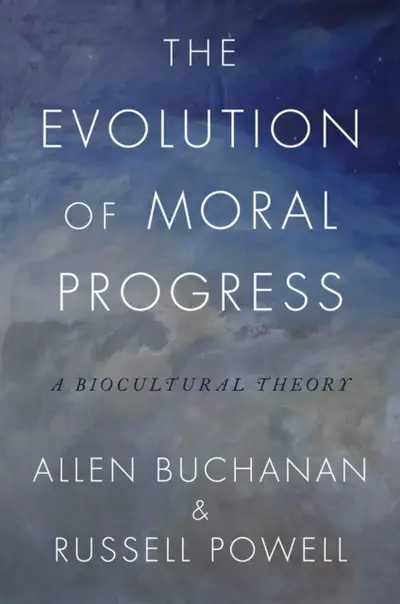
Evolution of Moral Progress
A Biocultural Theory
Price and availability
$36.99
Available in: Andorra, Austria, Australia, Belgium, Bulgaria, Canada, Switzerland, Cyprus, Czechia, Germany, Denmark, Estonia, Spain, Finland, France, United Kingdom, Guernsey, Greece, Croatia, Hungary, Ireland, Isle of Man, Iceland, Italy, Jersey, Japan, Liechtenstein, Lithuania, Luxembourg, Latvia, Monaco, Malta, Netherlands, Norway, Poland, Portugal, Romania, Sweden, Slovenia, Slovakia, San Marino, United States, Vatican City, South Africa
Stores: US, UK, Canada, EU, Australia.
Sign in to buyThe price is re-checked by the server before payment.
For personal use under the eBook licence.
- Format
- DRM
- Not stated by the publisher
- Language
- English
- Publisher
- Oxford University Press
- Published
- 8 June 2018
- ISBN
- 9780190868420
- Subjects
- Philosophy, Ethics & moral philosophy, Philosophy of science, Philosophy of science, QD, QDTQ
About this book
In The Evolution of Moral Progress, Allen Buchanan and Russell Powell resurrect the project of explaining moral progress. They avoid the errors of earlier attempts by drawing on a wide range of disciplines including moral and political philosophy, evolutionary biology, evolutionary psychology, anthropology, history, and sociology. Their focus is on one especially important type of moral progress: gains in inclusivity. They develop a framework to explain progress in inclusivity to also illuminate moral regression--the return to exclusivist and "e;tribalistic"e; moral beliefs and attitudes. Buchanan and Powell argue those tribalistic moral responses are not hard-wired by evolution in human nature. Rather, human beings have an evolved "e;adaptively plastic"e; capacity for both inclusion and exclusion, depending on environmental conditions. Moral progress in the dimension of inclusivity is possible, but only to the extent that human beings can create environments conducive to extending moral standing to all human beings and even to some animals. Buchanan and Powell take biological evolution seriously, but with a critical eye, while simultaneously recognizing the crucial role of culture in creating environments in which moral progress can occur. The book avoids both biological and cultural determinism. Unlike earlier theories of moral progress, their theory provides a naturalistic account that is grounded in the best empirical work, and unlike earlier theories it does not present moral progress as inevitable or as occurring in definite stages; but rather it recognizes the highly contingent and fragile character of moral improvement.
Bibliographic data © Gardners Books Ltd.