PDF · English
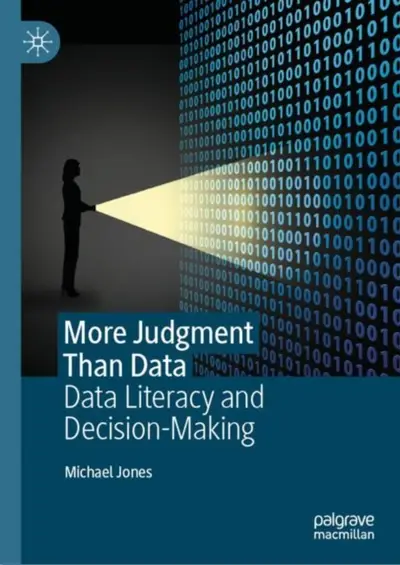
More Judgment Than Data
Data Literacy and Decision-Making
Price and availability
$120.99
Available in: Andorra, Austria, Australia, Belgium, Bulgaria, Canada, Switzerland, Cyprus, Czechia, Germany, Denmark, Estonia, Spain, Finland, France, United Kingdom, Guernsey, Greece, Croatia, Hungary, Ireland, Isle of Man, Iceland, Italy, Jersey, Japan, Liechtenstein, Lithuania, Luxembourg, Latvia, Monaco, Malta, Netherlands, Norway, Poland, Portugal, Romania, Sweden, Slovenia, Slovakia, San Marino, United States, Vatican City, South Africa
Stores: US, UK, Canada, EU, Australia.
Sign in to buyThe price is re-checked by the server before payment.
For personal use under the eBook licence.
- Format
- DRM
- Not stated by the publisher
- Language
- English
- Publisher
- Springer International Publishing
- Published
- 23 August 2022
- ISBN
- 9783030994723
- Subjects
- Economic theory & philosophy, Econometrics, Probability & statistics, Databases, Economic theory and philosophy, Probability and statistics, Databases / Data management
About this book
More data has been produced in the 21st century than all of human history combined. Yet, are we making better decisions today than in the past? How many poor decisions result from the absence of data? The existence of an overwhelming amount of data has affected how we make decisions, but it has not necessarily improved how we make decisions. To make better decisions, people need good judgment based on data literacy-the ability to extract meaning from data.Including data in the decision-making process can bring considerable clarity in answering our questions. Nevertheless, human beings can become distracted, overwhelmed, and even confused in the presence of too much data. The book presents cautionary tales of what can happen when too much attention is spent on acquiring more data instead of understanding how to best use the data we already have. Data is not produced in a vacuum, and individuals who possess data literacy will understand the environment and incentives in the data-generating process. Readers of this book will learn what questions to ask, what data to pay attention to, and what pitfalls to avoid in order to make better decisions. They will also be less vulnerable to those who manipulate data for misleading purposes.
Bibliographic data © Gardners Books Ltd.