EPUB · English
Cylinder
Kinematics of the Nineteenth Century
- Literary studies & poetry
- Biography & memoir
- Technology & engineering
- Arts, music & film
- Language & linguistics
Price and availability
$69.99
Available in: Andorra, Austria, Australia, Belgium, Bulgaria, Canada, Switzerland, Cyprus, Czechia, Germany, Denmark, Estonia, Spain, Finland, France, United Kingdom, Guernsey, Greece, Croatia, Hungary, Ireland, Isle of Man, Iceland, Italy, Jersey, Japan, Liechtenstein, Lithuania, Luxembourg, Latvia, Monaco, Malta, Netherlands, Norway, Poland, Portugal, Romania, Sweden, Slovenia, Slovakia, San Marino, United States, Vatican City, South Africa
Stores: US, UK, Canada, EU, Australia.
Sign in to buyThe price is re-checked by the server before payment.
For personal use under the eBook licence.
- Format
- EPUB
- DRM
- Not stated by the publisher
- Language
- English
- Publisher
- University of California Press
- Published
- 28 March 2012
- Pages
- 256
- ISBN
- 9780520952157
- Subjects
- Architecture, Language: reference & general, Anthologies (non-poetry), Literature: history & criticism, Literary theory, Engineering: general, Architecture, Language: reference and general, DNT, Literature: history and criticism, Literary theory, Engineering: general
About this book
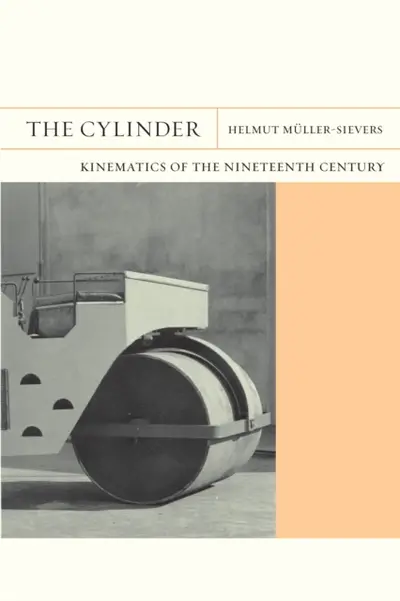
The Cylinder investigates the surprising proliferation of cylindrical objects in the nineteenth century, such as steam engines, phonographs, panoramas, rotary printing presses, silos, safety locks, and many more. Examining this phenomenon through the lens of kinematics, the science of forcing motion, Helmut Muller-Sievers provides a new view of the history of mechanics and of the culture of the industrial revolution, including its literature, that focuses on the metaphysics and aesthetics of motion. Muller-Sievers explores how nineteenth-century prose falls in with the specific rhythm of cylindrical machinery, re-imagines the curvature of cylindrical spaces, and conjoins narrative progress and reflection in a single stylistic motion. Illuminating the intersection of engineering, culture, and literature, he argues for a concept of culture that includes an epoch's relation to the motion of its machines.
Bibliographic data © Gardners Books Ltd.