PDF · English
Control and Resistance
Food Discourse in Franco Spain
Price and availability
$64.99
Available in: Andorra, Austria, Australia, Belgium, Bulgaria, Canada, Switzerland, Cyprus, Czechia, Germany, Denmark, Estonia, Spain, Finland, France, United Kingdom, Guernsey, Greece, Croatia, Hungary, Ireland, Isle of Man, Iceland, Italy, Jersey, Japan, Liechtenstein, Lithuania, Luxembourg, Latvia, Monaco, Malta, Netherlands, Norway, Poland, Portugal, Romania, Sweden, Slovenia, Slovakia, San Marino, United States, Vatican City, South Africa
Stores: US, UK, Canada, EU, Australia.
Sign in to buyThe price is re-checked by the server before payment.
For personal use under the eBook licence.
- Format
- DRM
- Not stated by the publisher
- Language
- English
- Publisher
- University of Toronto Press
- Published
- 24 February 2020
- Pages
- 192
- ISBN
- 9781487534677
- Subjects
- Literature: history & criticism, Literary studies: general, Social & cultural history, Food & society, Social impact of disasters, Famine, Ethnic studies, Literature: history and criticism, Literary studies: general, JBCC4, JBFF, JBSL, NHTB
About this book
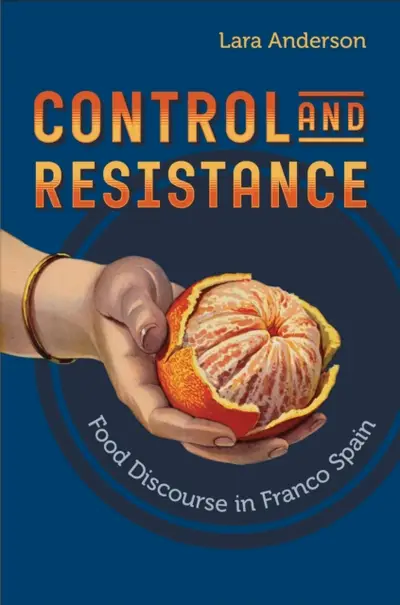
Control and Resistance reveals the various ways in which food writing of the early Franco era was a potent political tool, producing ways of eating and thinking about food that privileged patriotism over personal desire. The author examines a diverse range of official and non-official food texts to highlight how discourse helped construct and contest identities in line with the three ideological pillars of the regime: autarky, prescriptive gender roles, and monolithic nationalism. Official food discourse produced an audience with a taste for local foodstuffs, and also created a unified gastronomic space in which regional cuisines were co-opted for the purposes of culinary nationalism.The author discusses a genre of official texts directed solely at women, which demanded women's compliance and exclusive dedication to domesticity. Alongside such examples, Control and Resistance includes texts that offered resistance to the Franco hegemony. Food texts have traditionally been viewed as apolitical because of their connections with domesticity, so they were not subject to the same degree of censorship as other published works. Accordingly, food writing was at times more capable of offering disruptive or resistant textual spaces than other forms of discourse.
Bibliographic data © Gardners Books Ltd.