PDF · English
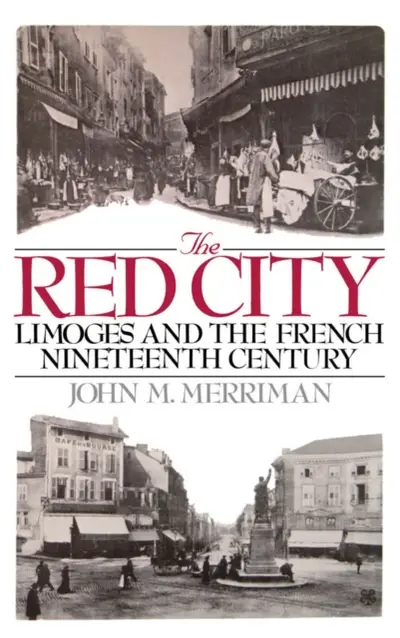
Red City
Limoges and the French Nineteenth Century
Price and availability
$139.99
Available in: Andorra, Austria, Australia, Belgium, Bulgaria, Canada, Switzerland, Cyprus, Czechia, Germany, Denmark, Estonia, Spain, Finland, France, United Kingdom, Guernsey, Greece, Croatia, Hungary, Ireland, Isle of Man, Iceland, Italy, Jersey, Japan, Liechtenstein, Lithuania, Luxembourg, Latvia, Monaco, Malta, Netherlands, Norway, Poland, Portugal, Romania, Sweden, Slovenia, Slovakia, San Marino, United States, Vatican City, South Africa
Stores: US, UK, Canada, EU, Australia.
Sign in to buyThe price is re-checked by the server before payment.
For personal use under the eBook licence.
- Format
- DRM
- Not stated by the publisher
- Language
- English
- Publisher
- Oxford University Press
- Published
- 5 September 1985
- ISBN
- 9780195365184
- Subjects
- France, History, European history, Modern history to 20th century: c 1700 to c 1900, Social & cultural history, NH, NHD, NHTB
About this book
This imaginative study recaptures 100 years in the life of Limoges, France's first socialist city, at a time when Limoges rode high on the crest of every wave of social, political, and industrial change. The story of this single city is the story of urban transformation and political radicalism in 19th-century France, of the struggle between tradition and modernity in French society and politics that took place not only within cities but also between cities and the countryside. Here, Merriman offers vivid portraits of particular social groups, neighborhoods, and events in 19th-century Limoges to describe and analyze the impact of large-scale industrialization, the social bases of political conflict, and the eventual emergence of a powerful working class. The central characters of Merriman's study are the very ordinary denizens of this extraordinary city--its butchers, porcelain workers, laundresses, priests--through whom one sees the effects of urbanization and industrialization on their quarters, work, religion, culture, and political life. The close of the 19th century marked the end of one of France's last truly revolutionary situations, concludes Merriman, as growing centralization dampened revolutionary zeal and the 20th century ushered in a combination of industrial capitalism and a powerful state that was seemingly invulnerable to revolutionary challenges from the working class.
Bibliographic data © Gardners Books Ltd.