PDF · English
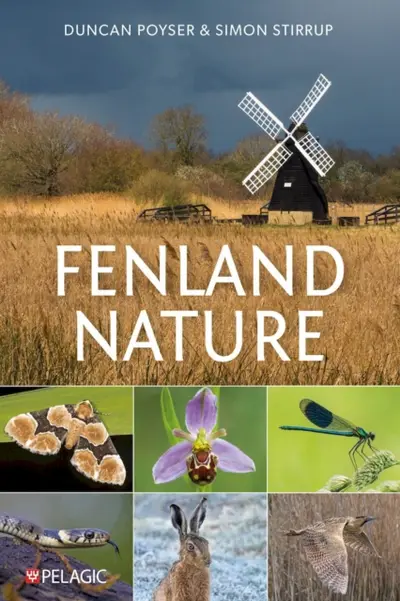
Fenland Nature
Price and availability
$71.99
Available in: Andorra, Austria, Australia, Belgium, Bulgaria, Canada, Switzerland, Cyprus, Czechia, Germany, Denmark, Estonia, Spain, Finland, France, United Kingdom, Guernsey, Greece, Croatia, Hungary, Ireland, Isle of Man, Iceland, Italy, Jersey, Japan, Liechtenstein, Lithuania, Luxembourg, Latvia, Monaco, Malta, Netherlands, Norway, Poland, Portugal, Romania, Sweden, Slovenia, Slovakia, San Marino, United States, Vatican City, South Africa
Stores: US, UK, Canada, EU, Australia.
Sign in to buyThe price is re-checked by the server before payment.
For personal use under the eBook licence.
- Format
- DRM
- Not stated by the publisher
- Language
- English
- Publisher
- Pelagic Publishing
- Published
- 6 May 2025
- ISBN
- 9781784274122
- Subjects
- Freshwater biology, Marine & freshwater mammals, Wetlands, swamps, fens, Wildlife: general interest, Freshwater biology, Zoology: marine and freshwater mammals, Wetlands, swamps, fens, Wildlife: general interest
About this book
This book showcases the natural history and landscape of the Fens, an area now responsible for a third of Britain's food production and worth over GBP3 billion to the economy every year. It describes the geology and geography across the Fenland Basin over the last 14,000 years, a period dominated by the flux of wetlands and movement of water. The human relationship with this landscape is traced through history: from Mesolithic hunters to the prosperity of a medieval economy based on the currency of eels, through the taming and draining of the vast wetlands, to modern farming on an industrial scale.While recognising that only a fraction of the Fens is left, Fenland Nature celebrates the breadth of wildlife still to be found in the region, from vast flocks of visiting wildfowl in the winter months, to rare and specialised plants and insects all illustrated with detailed and evocative photographs.The book concludes by contemplating an uncertain future where there are possibilities for a sustainable agricultural industry alongside increasing biodiversity, requiring new ways of thinking and working with the land. The fenland landscape is a microcosm of the huge global challenges caused by habitat loss, ecological degradation and climate change. If solutions can be found to these complex issues in the Fens, then there is hope that these can also apply to similar places across the world.
Bibliographic data © Gardners Books Ltd.