PDF · English
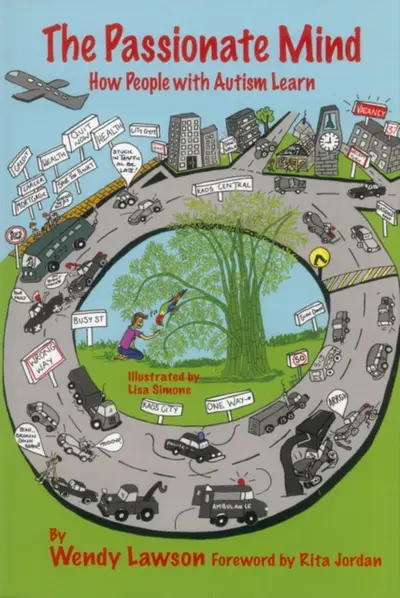
Passionate Mind
How People with Autism Learn
Price and availability
$27.99
Available in: Andorra, Austria, Australia, Belgium, Bulgaria, Canada, Switzerland, Cyprus, Czechia, Germany, Denmark, Estonia, Spain, Finland, France, United Kingdom, Guernsey, Greece, Croatia, Hungary, Ireland, Isle of Man, Iceland, Italy, Jersey, Japan, Liechtenstein, Lithuania, Luxembourg, Latvia, Monaco, Malta, Netherlands, Norway, Poland, Portugal, Romania, Sweden, Slovenia, Slovakia, San Marino, United States, Vatican City, South Africa
Stores: US, UK, Canada, EU, Australia.
Sign in to buyThe price is re-checked by the server before payment.
For personal use under the eBook licence.
- Format
- DRM
- Not stated by the publisher
- Language
- English
- Publisher
- Jessica Kingsley Publishers
- Published
- 15 March 2011
- ISBN
- 9780857003133
- Subjects
- Autism & Asperger’s Syndrome, Psychology, Autism Spectrum Disorder
About this book
In her new book, Wendy Lawson examines traditional theories about the autism spectrum (AS) and reveals their gaps and shortcomings. Showing that a completely different way of thinking about AS is needed, she sets forward the theory of Single Attention and Associated Cognition in Autism (SAACA), an approach that explains autism in terms of the unique learning style of AS individuals. The SAACA approach suggests that whereas neurotypical people can easily shift their attention from one task to another, those on the autism spectrum tend to use just one sense at a time, leading to a deep, intense attention. From the perspective of this new approach, Wendy describes practical outcomes for individuals, families, and places of education and employment, and shows that when the unique learning style of AS is understood, valued, and accommodated, AS individuals can be empowered to achieve their fullest potential. This is a fascinating read for anyone with a personal or professional interest in the autism spectrum, including clinical practitioners, educators, researchers, individuals on the spectrum and their families, teachers, occupational therapists, and other professionals.
Bibliographic data © Gardners Books Ltd.