EPUB · English
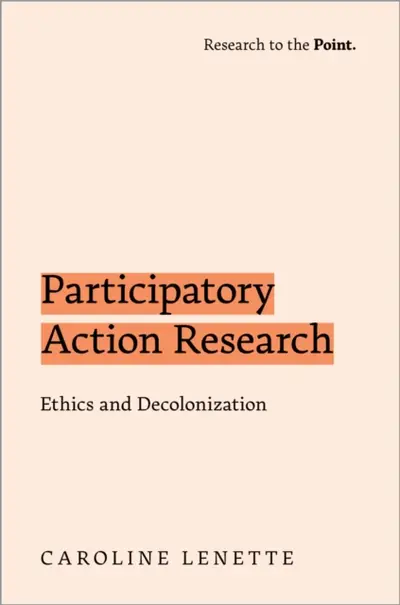
Participatory Action Research
Ethics and Decolonization
Price and availability
$24.99
Available in: Andorra, Austria, Australia, Belgium, Bulgaria, Canada, Switzerland, Cyprus, Czechia, Germany, Denmark, Estonia, Spain, Finland, France, United Kingdom, Guernsey, Greece, Croatia, Hungary, Ireland, Isle of Man, Iceland, Italy, Jersey, Japan, Liechtenstein, Lithuania, Luxembourg, Latvia, Monaco, Malta, Netherlands, Norway, Poland, Portugal, Romania, Sweden, Slovenia, Slovakia, San Marino, United States, Vatican City, South Africa
Stores: US, UK, Canada, EU, Australia.
Sign in to buyThe price is re-checked by the server before payment.
For personal use under the eBook licence.
- Format
- EPUB
- DRM
- Not stated by the publisher
- Language
- English
- Publisher
- Oxford University Press
- Published
- 3 May 2022
- ISBN
- 9780197512470
- Subjects
- Psychological methodology, Psychological methodology
About this book
Participatory Action Research (PAR) privileges the involvement of participants as co-researchers to generate new knowledge and act on findings to effect social change. In PAR projects, academic researchers collaborate closely with co-researchers, working from the idea that these individuals, especially those who are usually marginalized from institutions, can be engaged in meaningful research activities to achieve social justice outcomes in addition to answering research questions. When deployed ethically in collaboration with co-researchers, PAR's participatory element facilitates a 'bottom-up' approach where knowledge is co-created through grassroots or community-based activities. This book goes beyond a PAR 'how to' manual on the methodology. Rather it synthesizes key learnings in contemporary research, with a distinct focus on the challenging aspects of undertaking PAR in practice and strategies to address these. It provides a clear and user-friendly collection of practical and contextual examples and presents key pointers on the implications of PAR methods, their strengths and weaknesses, and strategies for the field. These examples will be useful for critical class discussions, as well as to anticipate fieldwork pitfalls and pre-empt challenges through collaborative approaches.
Bibliographic data © Gardners Books Ltd.