PDF · English
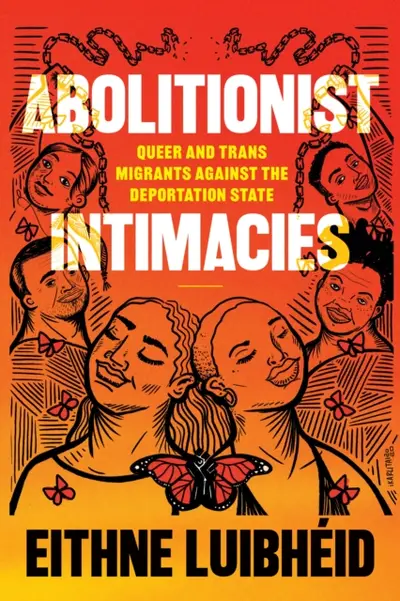
Abolitionist Intimacies
Queer and Trans Migrants against the Deportation State
Price and availability
$36.99
Available in: Andorra, Austria, Australia, Belgium, Bulgaria, Canada, Switzerland, Cyprus, Czechia, Germany, Denmark, Estonia, Spain, Finland, France, United Kingdom, Guernsey, Greece, Croatia, Hungary, Ireland, Isle of Man, Iceland, Italy, Jersey, Japan, Liechtenstein, Lithuania, Luxembourg, Latvia, Monaco, Malta, Netherlands, Norway, Poland, Portugal, Romania, Sweden, Slovenia, Slovakia, San Marino, United States, Vatican City, South Africa
Stores: US, UK, Canada, EU, Australia.
Sign in to buyThe price is re-checked by the server before payment.
For personal use under the eBook licence.
- Format
- DRM
- Not stated by the publisher
- Language
- English
- Publisher
- Duke University Press
- Published
- 18 April 2025
- ISBN
- 9781478060260
- Subjects
- USA, 5S, Migration, immigration & emigration, Gender studies: transsexuals & hermaphroditism, United States of America, USA, 5PS, JBFH, JBSF3
About this book
In Abolitionist Intimacies, Eithne Luibheid examines writings by and about queer- and trans-identified migrants and allies who contest pervasive US immigration practices and work toward a future without detention, deportation, and border controls. Luibheid shows how these migrants and activists confront such controls by mobilizing intimacies-forging close connections in order to survive in the present. From forms of kinship beyond the heterosexual nuclear family to networks of solidarity, intimacies allow queer and trans migrants and allies to challenge the infrastructures that support the deportation state: proposed pathways to citizenship for undocumented migrants; marriage as a means for legalization; traffic interactions as a pipeline to deportation; and queer and trans migrant detention. In the process, activists and theorists have advanced new visions and configurations of possible intimacies that not only challenge deportation but also rework what immigration control and citizenship could mean. By focusing on these abolitionist efforts as well as the publicly available records on queer and trans deportees, Luibheid highlights the new understandings that emerge when the experiences of queer and trans people are centered.
Bibliographic data © Gardners Books Ltd.