EPUB · English
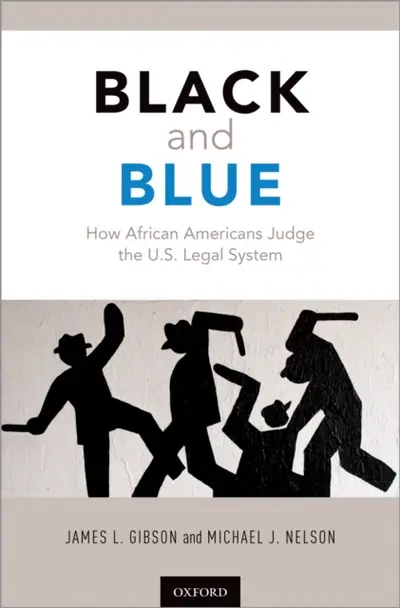
Black and Blue
How African Americans Judge the U.S. Legal System
Price and availability
$28.99
Available in: Andorra, Austria, Australia, Belgium, Bulgaria, Canada, Switzerland, Cyprus, Czechia, Germany, Denmark, Estonia, Spain, Finland, France, United Kingdom, Guernsey, Greece, Croatia, Hungary, Ireland, Isle of Man, Iceland, Italy, Jersey, Japan, Liechtenstein, Lithuania, Luxembourg, Latvia, Monaco, Malta, Netherlands, Norway, Poland, Portugal, Romania, Sweden, Slovenia, Slovakia, San Marino, United States, Vatican City, South Africa
Stores: US, UK, Canada, EU, Australia.
Sign in to buyThe price is re-checked by the server before payment.
For personal use under the eBook licence.
- Format
- EPUB
- DRM
- Not stated by the publisher
- Language
- English
- Publisher
- Oxford University Press
- Published
- 25 September 2018
- ISBN
- 9780190865245
- Subjects
- Courts & procedure, Civil procedure, litigation & dispute resolution, Private / Civil law: general works, Criminal justice law, Legal systems: courts and procedures, Legal systems: civil procedure, litigation and dispute resolution, Private or civil law: general, Criminal justice law
About this book
The American legal system is experiencing a period of extreme stress, if not crisis, as it seems to be losing its legitimacy with at least some segments of its constituency. Nowhere is this legitimacy deficit more apparent than in a portion of the African American community in the U.S., as incidents of police killing black suspects - whether legally justified or not - have become almost routine. However, this legitimacy deficit has largely been documented through anecdotal evidence and a steady drumbeat of journalistic reports, not rigorous scientific research. This book offers an all-inclusive account of how and why African Americans differ in their willingness to ascribe legitimacy to legal institutions, as well as in their willingness to accept the policy decisions those institutions promulgate. Based on two nationally-representative samples of African Americans, this book ties together four dominant theories of public opinion: Legitimacy Theory, Social Identity Theory, theories of adulthood political socialization and learning through experience, and information processing theories. The findings reveal a gaping chasm in legal legitimacy between black and white Americans. More importantly, black people themselves differ in their perceptions of legal legitimacy. Group identities and experiences with legal authorities play a crucial role in shaping whether and how black people extend legitimacy to the legal institutions that so much affect them. This book is one of the most comprehensive analyses produced to date of legal legitimacy within the American black community, with many surprising and counter-intuitive results.
Bibliographic data © Gardners Books Ltd.