EPUB · English
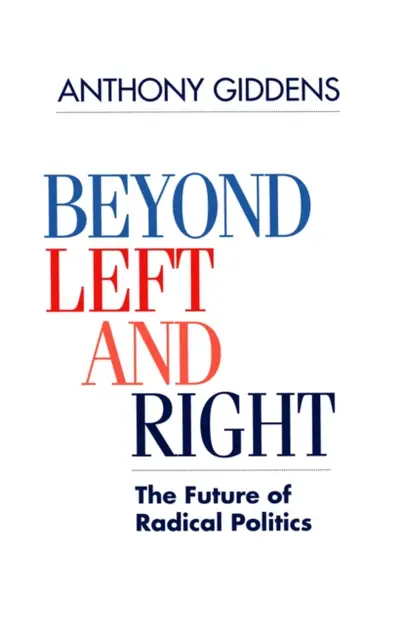
Beyond Left and Right
The Future of Radical Politics
Price and availability
$25.99
Available in: Andorra, Austria, Australia, Belgium, Bulgaria, Canada, Switzerland, Cyprus, Czechia, Germany, Denmark, Estonia, Spain, Finland, France, United Kingdom, Guernsey, Greece, Croatia, Hungary, Ireland, Isle of Man, Iceland, Italy, Jersey, Japan, Liechtenstein, Lithuania, Luxembourg, Latvia, Monaco, Malta, Netherlands, Norway, Poland, Portugal, Romania, Sweden, Slovenia, Slovakia, San Marino, United States, Vatican City, South Africa
Stores: US, UK, Canada, EU, Australia.
Sign in to buyThe price is re-checked by the server before payment.
For personal use under the eBook licence.
- Format
- EPUB
- DRM
- Not stated by the publisher
- Language
- English
- Publisher
- Polity Press
- Published
- 23 August 2013
- ISBN
- 9780745666549
- Subjects
- linguistics, Politics & government, Political science & theory, Political ideologies, Linguistics, Politics and government, Political science and theory, Political ideologies and movements
About this book
How should one understand the nature and possibilities of political radicalism today? The political radical is normally thought of as someone who stands on the left, opposing backward-looking conservatism. In the present day, however, the left has turned defensive, while the right has become radical, advocating the free play of market forces no matter what obstacles of tradition or custom stand in their way. What explains such a curious twist of perspective? In answering this question Giddens develops a new framework for radical politics, drawing freely on what he calls "e;philosophic conservatism"e;, but applying this outlook in the service of values normally associated with the Left. The ecological crisis is at the core of this analysis, but is understood by Giddens in an unconventional way - as a response to a world in which modernity has run up against its limits as a social and moral order. The end of nature, as an entity existing independently of human intervention, and the end of tradition, combined with the impact of globalization, are the forces which now have to be confronted, made use of and coped with. This book provides a powerful interpretation of the rise of fundamentalism, of democracy, the persistence of gender divisions and the question of a normative political theory of violence. It will be essential reading for anyone seeking a novel approach to the political challenges which we face at the turn of the twenty-first century.
Bibliographic data © Gardners Books Ltd.