PDF · English
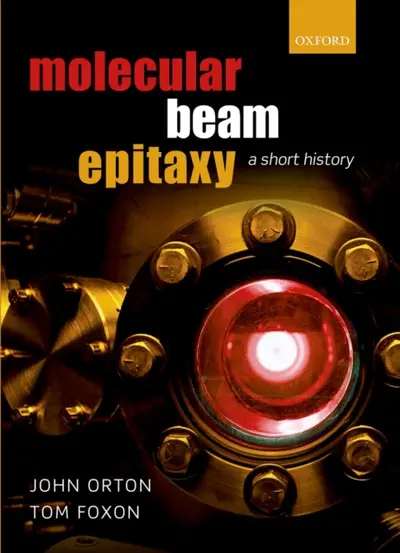
Molecular Beam Epitaxy
A Short History
Price and availability
$70.99
Available in: Andorra, Austria, Australia, Belgium, Bulgaria, Canada, Switzerland, Cyprus, Czechia, Germany, Denmark, Estonia, Spain, Finland, France, United Kingdom, Guernsey, Greece, Croatia, Hungary, Ireland, Isle of Man, Iceland, Italy, Jersey, Japan, Liechtenstein, Lithuania, Luxembourg, Latvia, Monaco, Malta, Netherlands, Norway, Poland, Portugal, Romania, Sweden, Slovenia, Slovakia, San Marino, United States, Vatican City, South Africa
Stores: US, UK, Canada, EU, Australia.
Sign in to buyThe price is re-checked by the server before payment.
For personal use under the eBook licence.
- Format
- DRM
- Not stated by the publisher
- Language
- English
- Publisher
- Oxford University Press
- Published
- 25 June 2015
- ISBN
- 9780191061165
- Subjects
- History of science, Condensed matter physics (liquid state & solid state physics), Electronic devices & materials, Semi-conductors & super-conductors, History of science, Condensed matter physics (liquid state and solid state physics), Electronic devices and materials
About this book
The book is a history of Molecular Beam Epitaxy (MBE) as applied to the growth of semiconductor thin films (note that it does not cover the subject of metal thin films). It begins by examining the origins of MBE, first of all looking at the nature of molecular beams and considering their application to fundamental physics, to the development of nuclear magnetic resonance and to the invention of the microwave MASER. It shows how molecular beams of silane (SiH4) were used to study the nucleation of silicon films on a silicon substrate and how such studies were extended to compound semiconductors such as GaAs. From such surface studies in ultra-high vacuum the technique developed into a method of growing high quality single crystal films of a wide range of semiconductors. Comparing this with earlier evaporation methods of deposition and with other epitaxial deposition methods such as liquid phase and vapour phase epitaxy (LPE and VPE). The text describes the development of MBE machines from the early home-made variety to that of commercial equipment and show how MBE was gradually refined to produce high quality films with atomic dimensions. This was much aided by the use of various in-situ surface analysis techniques, such as reflection high energy electron diffraction (RHEED) and mass spectrometry, a feature unique to MBE. It looks at various modified versions of the basic MBE process, then proceed to describe their application to the growth of so-called low-dimensional structures (LDS) based on ultra-thin heterostructure films with thickness of order a few molecular monolayers. Further chapters cover the growth of a wide range of different compounds and describe their application to fundamental physics and to the fabrication of electronic and opto-electronic devices. The authors study the historical development of all these aspects and emphasise both the (often unexpected) manner of their discovery and development and the unique features which MBE brings to the growth of extremely complex structures with monolayer accuracy.
Bibliographic data © Gardners Books Ltd.