EPUB · English
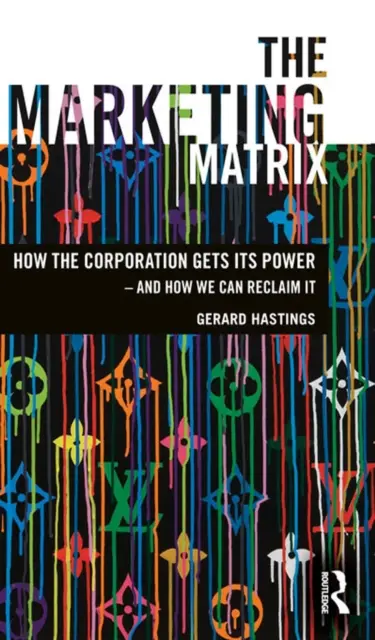
Marketing Matrix
How the Corporation Gets Its Power - And How We Can Reclaim It
Price and availability
$85.99
Available in: Andorra, Austria, Australia, Belgium, Bulgaria, Canada, Switzerland, Cyprus, Czechia, Germany, Denmark, Estonia, Spain, Finland, France, United Kingdom, Guernsey, Greece, Croatia, Hungary, Ireland, Isle of Man, Iceland, Italy, Jersey, Japan, Liechtenstein, Lithuania, Luxembourg, Latvia, Monaco, Malta, Netherlands, Norway, Poland, Portugal, Romania, Sweden, Slovenia, Slovakia, San Marino, United States, Vatican City, South Africa
Stores: US, UK, Canada, EU, Australia.
Sign in to buyThe price is re-checked by the server before payment.
For personal use under the eBook licence.
- Format
- EPUB
- DRM
- Not stated by the publisher
- Language
- English
- Publisher
- Taylor & Francis
- Published
- 2 May 2013
- ISBN
- 9781136228919
- Subjects
- Environmental economics, Business & management, Business ethics & social responsibility, Sales & marketing management, Sales & marketing, KCVG, Business and Management, Business ethics and social responsibility, Sales and marketing management, Sales and marketing
About this book
In the hands of the corporate sector, marketing has turned us into spoilt, consumption-obsessed children who are simultaneously wrecking our bodies, psyches and planet. Given the fiduciary duties of the corporation, notions like consumer sovereignty, customer service and relationship building are just corrosive myths that seduce us into quiescence, whilst furnishing big business with unprecedented power. Corporate Social Responsibility, the ultimate oxymoron, and its country cousin, Cause Related Marketing, are just means of currying favour amongst our political leaders and further extending corporate power. So it is time to fight back. As individuals we have enormous internal strength; collectively we have, and can again, change the world (indeed marketing itself is a function of humankind's capacity to cooperate to overcome difficulties and way predates its co-option by corporations). From the purpose and resilience Steinbeck's sharecroppers ('we're the people - we go on'), through Eisenhower's 'alert and knowledgeable citizenry' to Arundhati Roy's timely reminder about the wisdom of indigenous people 'are not relics of the past, but the guides to our future', there are lots of reasons for optimism. If these talents and strengths can be combined with serious moves to contain the corporate sector, it is possible to rethink our economic and social priorities. The book ends with a call to do just this. This compelling and accessible book will be of interest across the social sciences and humanities - and indeed to anyone who has concerns about the current state of consumer society. It will also be particularly useful reading for those marketing students who'd prefer a critical perspective to the standard ritualization of their discipline.
Bibliographic data © Gardners Books Ltd.