EPUB · English
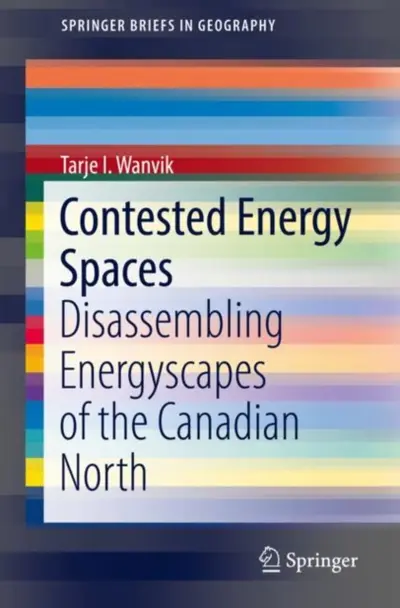
Contested Energy Spaces
Disassembling Energyscapes of the Canadian North
Price and availability
$60.99
Available in: Andorra, Austria, Australia, Belgium, Bulgaria, Canada, Switzerland, Cyprus, Czechia, Germany, Denmark, Estonia, Spain, Finland, France, United Kingdom, Guernsey, Greece, Croatia, Hungary, Ireland, Isle of Man, Iceland, Italy, Jersey, Japan, Liechtenstein, Lithuania, Luxembourg, Latvia, Monaco, Malta, Netherlands, Norway, Poland, Portugal, Romania, Sweden, Slovenia, Slovakia, San Marino, United States, Vatican City, South Africa
Stores: US, UK, Canada, EU, Australia.
Sign in to buyThe price is re-checked by the server before payment.
For personal use under the eBook licence.
- Format
- EPUB
- DRM
- Not stated by the publisher
- Language
- English
- Publisher
- Springer International Publishing
- Published
- 30 October 2018
- ISBN
- 9783030023966
- Subjects
- Canada, Energy industries & utilities, Environment law, Geography, Physical geography & topography, Human geography, Energy technology & engineering, Environment, transport and planning law: general, Physical geography and topography, Human geography, Social geography, The environment
About this book
This authored brief discusses how to conceptualize the socio-material complexity of contested energy spaces in the Canadian North, specifically in the context of indigenous communities that have allowed industrial developments to occur on their lands despite the environmental and lifestyle consequences. By applying assemblage theory, the author identifies contested energy spaces as complex places or situations that need to be understood through geographical concepts of place, scale, and power. In 6 chapters, the book challenges preconceptions of indigenous peoples as victims by examining communities that favor industrial developments, and identifies instabilities in the Canadian North to analyze the power relations between industry, state and indigenous communities. The book will be of interest to undergraduate and graduate students, teachers and lecturers, and geography scholars.Chapter 1 introduces the concept of energy spaces, and addresses the main research question posed in the text; why do some indigenous communities support extractive industry developments on their traditional territories, despite substantial destruction of the local environment and traditional indigenous land use practices? Chapter 2 further elaborates on the conceptualization of contested energy spaces, and chapter 3 applies this to the study area in Alberta, Canada. Chapter 4 discusses the methodology of the research process, and chapter 5 presents empirical cases in Alberta, from the changing governance structures of energy spaces to the networking of local indigenous communities. Chapter 6 concludes the brief by summarizing he findings, and by offering advice to all stakeholders regarding the dangers of leaving government processes to market forces alone.
Bibliographic data © Gardners Books Ltd.