PDF · English
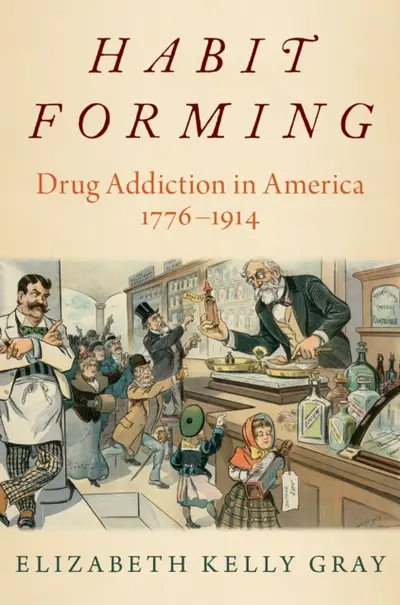
Habit Forming
Drug Addiction in America, 1776-1914
Price and availability
$28.99
Available in: Andorra, Austria, Australia, Belgium, Bulgaria, Canada, Switzerland, Cyprus, Czechia, Germany, Denmark, Estonia, Spain, Finland, France, United Kingdom, Guernsey, Greece, Croatia, Hungary, Ireland, Isle of Man, Iceland, Italy, Jersey, Japan, Liechtenstein, Lithuania, Luxembourg, Latvia, Monaco, Malta, Netherlands, Norway, Poland, Portugal, Romania, Sweden, Slovenia, Slovakia, San Marino, United States, Vatican City, South Africa
Stores: US, UK, Canada, EU, Australia.
Sign in to buyThe price is re-checked by the server before payment.
For personal use under the eBook licence.
- Format
- DRM
- Not stated by the publisher
- Language
- English
- Publisher
- Oxford University Press
- Published
- 2 December 2022
- ISBN
- 9780190073138
- Subjects
- USA, History of the Americas, Social & cultural history, History of medicine, United States of America, USA, History of medicine, NHK, NHTB
About this book
Habitual drug use in the United States is at least as old as the nation itself. Habit Forming traces the history of unregulated drug use and dependency before 1914, when the Harrison Narcotic Tax Act limited sales of opiates and cocaine under US law. Many Americans used opiates and other drugs medically and became addicted. Some tried Hasheesh Candy, injected morphine, or visited opium dens, but neither use nor addiction was linked to crime, due to the dearth of restrictive laws. After the Civil War, American presses published extensively about domestic addiction. Later in the nineteenth century, many used cocaine and heroin as medicine. As addiction became a major public health issue, commentators typically sympathized with white, middle-class drug users, while criticizing such use by poor or working-class people and people of color. When habituation was associated with middle-class morphine users, few advocated for restricted drug access. By the 1910s, as use was increasingly associated with poor young men, support for regulations increased. In outlawing users' access to habit-forming drugs at the national level, a public health problem became a larger legal and social problem, one with an enduring influence on American drug laws and their enforcement.
Bibliographic data © Gardners Books Ltd.