EPUB · English
Memory We Could Be
Price and availability
$20.99
Available in: Andorra, Austria, Australia, Belgium, Bulgaria, Canada, Switzerland, Cyprus, Czechia, Germany, Denmark, Estonia, Spain, Finland, France, United Kingdom, Guernsey, Greece, Croatia, Hungary, Ireland, Isle of Man, Iceland, Italy, Jersey, Japan, Liechtenstein, Lithuania, Luxembourg, Latvia, Monaco, Malta, Netherlands, Norway, Poland, Portugal, Romania, Sweden, Slovenia, Slovakia, San Marino, United States, Vatican City, South Africa
Stores: US, UK, Canada, EU, Australia.
Sign in to buyThe price is re-checked by the server before payment.
For personal use under the eBook licence.
- Format
- EPUB
- DRM
- Not stated by the publisher
- Language
- English
- Publisher
- New Internationalist
- Published
- 20 December 2018
- ISBN
- 9781780264417
- Subjects
About this book
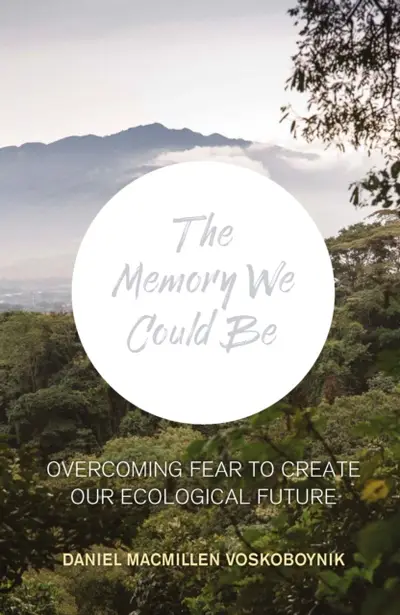
<i>The Memory We Could Be</i> attempts to move beyond the sterile, technical language that has pervaded discussions around climate change and ecology. It seeks to counter the bureaucratic prose of our conversations, to humanise the abstraction of global warming, and bring different voices into the conversation. Drawing on a variety of sources from anthropology to hydrology, botany to economics, agronomy to astrobiology, medicine to oceanography, physics to history the author weaves a concise, lyrical and powerful story of our relationship with nature. The book is divided into three sections: Past, Present, and Future. Past is about memory. Our inability to comprehend our staggering present partly lies in our ignorance of our staggering past. We peer into the black box of our human past to understand how we got here. We go on a journey across the roots of our ecological crisis, from the Roman Empire to the forests of Burma, from Congolese rubber plantations to Colombian oil fields. Present illustrates how climate change is shaping our world today. Climate change, so often associated with the future, is profoundly contemporary. By exploring how climate change relates to poverties and inequalities, this section hopes to equip the reader with a set of intuitive instruments to understand modern and future climate impacts. Future is anchored around alternatives, and strives to illustrate in human terms the world we could lose and the world we can win. It also asks questions as to what we can do, and attempts to clarify a transformative vision of more ecological and equitable economy.
Bibliographic data © Gardners Books Ltd.