EPUB · English
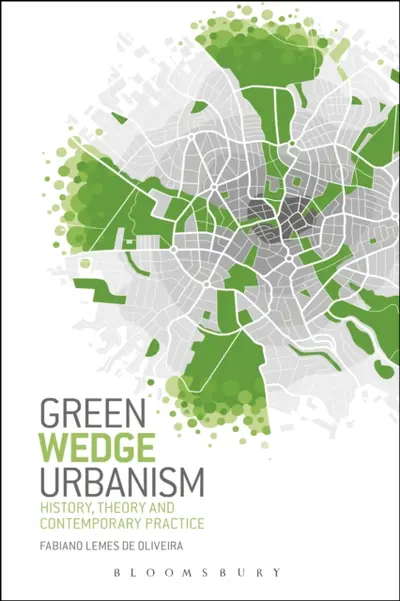
Green Wedge Urbanism
History, Theory and Contemporary Practice
Price and availability
$40.99
Available in: Andorra, Austria, Australia, Belgium, Bulgaria, Canada, Switzerland, Cyprus, Czechia, Germany, Denmark, Estonia, Spain, Finland, France, United Kingdom, Guernsey, Greece, Croatia, Hungary, Ireland, Isle of Man, Iceland, Italy, Jersey, Japan, Liechtenstein, Lithuania, Luxembourg, Latvia, Monaco, Malta, Netherlands, Norway, Poland, Portugal, Romania, Sweden, Slovenia, Slovakia, San Marino, United States, Vatican City, South Africa
Stores: US, UK, Canada, EU, Australia.
Sign in to buyThe price is re-checked by the server before payment.
For personal use under the eBook licence.
- Format
- EPUB
- DRM
- Not stated by the publisher
- Language
- English
- Publisher
- Bloomsbury Publishing
- Published
- 23 February 2017
- Pages
- 304
- ISBN
- 9781474229197
- Subjects
- Landscape art & architecture, City & town planning - architectural aspects, History of architecture, Urban & municipal planning, Landscape architecture and design, City and town planning: architectural aspects, History of architecture, Urban and municipal planning and policy
About this book
As towns and cities worldwide deal with fast-increasing land pressures, while also trying to promote more sustainable, connected communities, the creation of green spaces within urban areas is receiving greater attention than ever before. At the same time, the value of the 'green belt' as the most prominent model of green space planning is being widely questioned, and an array of alternative models are being proposed. This book explores one of those alternative models the 'green wedge', showing how this offers a successful model for integrating urban development and nature in existing and new towns and cities around the world. Green wedges, considered here as ducts of green space running from the countryside into the centre of a city or town, are not only making a comeback in urban planning, but they have a deeper history in the twentieth century than many expect a history that provides valuable insight and lessons in the employment of networked green spaces in city design and regional planning today. Part history, and part contemporary argument, this book first examines the emergence and global diffusion of the green wedge in town planning in the late 19th and early 20th centuries, placing it in the broader historic context of debates and ideas for urban planning with nature, before going on to explore its use in contemporary urban practice. Examining their relation to green infrastructures, landscape ecology and landscape urbanism and their potential for sustainable cities, it highlights the continued relevance of a historic idea in an era of rapid climate change.
Bibliographic data © Gardners Books Ltd.