PDF · English
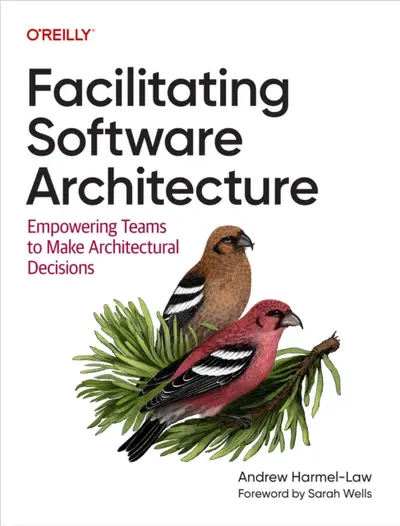
Facilitating Software Architecture
Price and availability
$64.99
Available in: Andorra, Austria, Australia, Belgium, Bulgaria, Canada, Switzerland, Cyprus, Czechia, Germany, Denmark, Estonia, Spain, Finland, France, United Kingdom, Guernsey, Greece, Croatia, Hungary, Ireland, Isle of Man, Iceland, Italy, Jersey, Japan, Liechtenstein, Lithuania, Luxembourg, Latvia, Monaco, Malta, Netherlands, Norway, Poland, Portugal, Romania, Sweden, Slovenia, Slovakia, San Marino, United States, Vatican City, South Africa
Stores: US, UK, Canada, EU, Australia.
Sign in to buyThe price is re-checked by the server before payment.
For personal use under the eBook licence.
- Format
- DRM
- Not stated by the publisher
- Language
- English
- Publisher
- O'Reilly Media
- Published
- 8 November 2024
- ISBN
- 9781098151836
- Subjects
- Project management, Enterprise software, Computer programming / software development, Systems analysis & design, Computer architecture & logic design, Project management, Enterprise software, Computer programming / software engineering, Systems analysis and design, Computer architecture and logic design
About this book
The software architect role is evolving. As systems and their interactions with the teams that build, run, and evolve them become more complex, it's often impossible for those playing the traditional architect roles to be everywhere they need to be. There's simply too much architecture to be done, and the situation has reached a breaking point. There's a better way. Author Andrew Harmel-Law shows you how architects and development teams can collaborate to create and evolve more efficient architectures for their systems. Techniques in this book will help you learn how to create a mindset that allows everyone to practice architecture and build the best systems they've ever experienced. With this book, you will:Understand the new dynamics that affect modern software deliveryLearn a methodology that brings software architecture and development togetherNurture the fundamental interplay of decisions, advice, architecture, and feedback from running systemsInitiate practices that maximize benefits and mitigate risksCreate an approach tuned to architecture, everyone's skills, and your organization's culture
Bibliographic data © Gardners Books Ltd.