EPUB · English
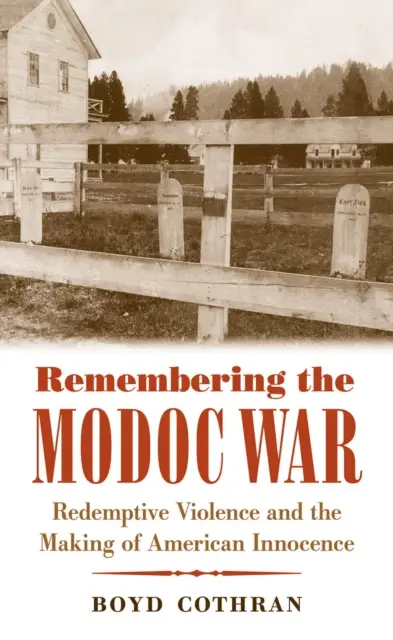
Remembering the Modoc War
Redemptive Violence and the Making of American Innocence
Price and availability
$27.99
Available in: Andorra, Austria, Australia, Belgium, Bulgaria, Canada, Switzerland, Cyprus, Czechia, Germany, Denmark, Estonia, Spain, Finland, France, United Kingdom, Guernsey, Greece, Croatia, Hungary, Ireland, Isle of Man, Iceland, Italy, Jersey, Japan, Liechtenstein, Lithuania, Luxembourg, Latvia, Monaco, Malta, Netherlands, Norway, Poland, Portugal, Romania, Sweden, Slovenia, Slovakia, San Marino, United States, Vatican City, South Africa
Stores: US, UK, Canada, EU, Australia.
Sign in to buyThe price is re-checked by the server before payment.
For personal use under the eBook licence.
- Format
- EPUB
- DRM
- Not stated by the publisher
- Language
- English
- Publisher
- The University of North Carolina Press
- Published
- 15 September 2014
- ISBN
- 9781469618616
- Subjects
- USA, Western & Pacific Coast states, California, Oregon, c 1800 to c 1900, History of the Americas, Modern history to 20th century: c 1700 to c 1900, Social & cultural history, Military history, Indigenous peoples, US Pacific Northwest, Indigenous peoples / Indigeneity, History of the Americas, Social and cultural history, Local history
About this book
On October 3, 1873, the U.S. Army hanged four Modoc headmen at Oregons Fort Klamath. The condemned had supposedly murdered the only U.S. Army general to die during the Indian wars of the nineteenth century. Their much-anticipated execution marked the end of the Modoc War of 187273. But as Boyd Cothran demonstrates, the conflicts close marked the beginning of a new struggle over the memory of the war. Examining representations of the Modoc War in the context of rapidly expanding cultural and commercial marketplaces, Cothran shows how settlers created and sold narratives of the conflict that blamed the Modocs. These stories portrayed Indigenous people as the instigators of violence and white Americans as innocent victims.Cothran examines the production and circulation of these narratives, from sensationalized published histories and staged lectures featuring Modoc survivors of the war to commemorations and promotional efforts to sell newly opened Indian lands to settlers. As Cothran argues, these narratives of American innocence justified not only violence against Indians in the settlement of the West but also the broader process of U.S. territorial and imperial expansion.
Bibliographic data © Gardners Books Ltd.