PDF · English
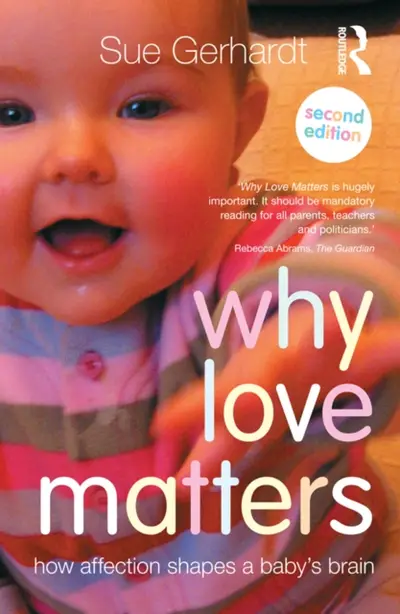
Why Love Matters
How affection shapes a baby's brain
Price and availability
$35.99
Available in: Andorra, Austria, Australia, Belgium, Bulgaria, Canada, Switzerland, Cyprus, Czechia, Germany, Denmark, Estonia, Spain, Finland, France, United Kingdom, Guernsey, Greece, Croatia, Hungary, Ireland, Isle of Man, Iceland, Italy, Jersey, Japan, Liechtenstein, Lithuania, Luxembourg, Latvia, Monaco, Malta, Netherlands, Norway, Poland, Portugal, Romania, Sweden, Slovenia, Slovakia, San Marino, United States, Vatican City, South Africa
Stores: US, UK, Canada, EU, Australia.
Sign in to buyThe price is re-checked by the server before payment.
For personal use under the eBook licence.
- Format
- DRM
- Not stated by the publisher
- Language
- English
- Publisher
- Taylor & Francis
- Published
- 24 October 2014
- ISBN
- 9781000031348
- Subjects
- Child & developmental psychology, Neurology & clinical neurophysiology, Paediatric medicine, Psychotherapy, Child, developmental and lifespan psychology, Neurosciences
About this book
Why Love Matters explains why loving relationships are essential to brain development in the early years, and how these early interactions can have lasting consequences for future emotional and physical health. This second edition follows on from the success of the first, updating the scientific research, covering recent findings in genetics and the mind/body connection, and including a new chapter highlighting our growing understanding of the part also played by pregnancy in shaping a baby's future emotional and physical well-being. The author focuses in particular on the wide-ranging effects of early stress on a baby or toddler's developing nervous system. When things go wrong with relationships in early life, the dependent child has to adapt; what we now know is that his or her brain adapts too. The brain's emotion and immune systems are particularly affected by early stress and can become less effective. This makes the child more vulnerable to a range of later difficulties such as depression, anti-social behaviour, addictions or anorexia, as well as physical illness.
Bibliographic data © Gardners Books Ltd.