PDF · English
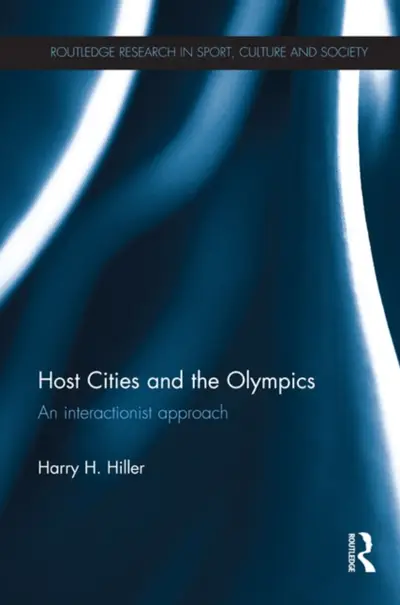
Host Cities and the Olympics
An Interactionist Approach
Price and availability
$83.99
Available in: Andorra, Austria, Australia, Belgium, Bulgaria, Canada, Switzerland, Cyprus, Czechia, Germany, Denmark, Estonia, Spain, Finland, France, United Kingdom, Guernsey, Greece, Croatia, Hungary, Ireland, Isle of Man, Iceland, Italy, Jersey, Japan, Liechtenstein, Lithuania, Luxembourg, Latvia, Monaco, Malta, Netherlands, Norway, Poland, Portugal, Romania, Sweden, Slovenia, Slovakia, San Marino, United States, Vatican City, South Africa
Stores: US, UK, Canada, EU, Australia.
Sign in to buyThe price is re-checked by the server before payment.
For personal use under the eBook licence.
- Format
- DRM
- Not stated by the publisher
- Language
- English
- Publisher
- Taylor & Francis
- Published
- 25 June 2012
- ISBN
- 9781136326752
- Subjects
- Urban communities, Sociology: sport & leisure, Sports & outdoor recreation, British Columbia South Coast: Greater Vancouver, Sociology: sport and leisure, Urban and municipal planning and policy
About this book
Rather than interpreting the Olympics as primarily a sporting event of international or national significance, this book understands the Games as a civic project for the host city that serves as a catalyst for a variety of urban interests over a period of many years from the bidding phase through the event itself. Traditional Olympic studies have tended to examine the Games from an outsider's perspective or as something experienced through the print media or television. In contrast, the focus presented here is on the dynamics within the host city understood as a community of interacting individuals who encounter the Games in a variety of ways through support, opposition, or even indifference but who have a profound influence on the outcome of the Games as actors and players in the Olympics as a drama.Adopting a symbolic interactionist approach, the book offers a new interpretive model through which to understand the Olympic Games by exploring the relationship between the Games and residents of the host city. Key analytical concepts such as framing, dramaturgy, the public realm, and the symbolic field are introduced and illustrated through empirical research from the Vancouver 2010 Winter Games, and it is shown how social media and shifts in public opinion reflected interaction effects within the city. By filling a clear lacuna in the Olympic Studies canon, this book is important reading for anybody with an interest in the sociology of sport, urban studies, event studies or urban sociology.
Bibliographic data © Gardners Books Ltd.