PDF · English
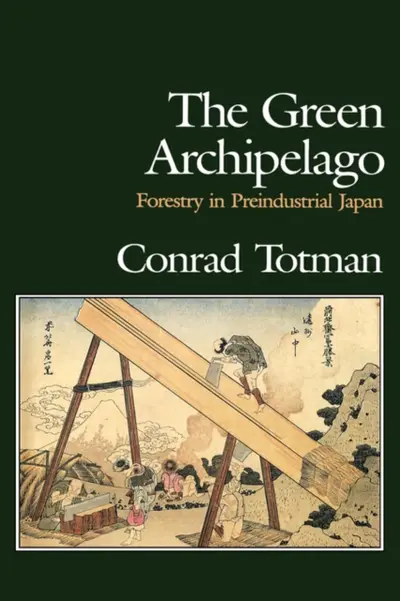
Green Archipelago
Forestry in Pre-Industrial Japan
Price and availability
$78.99
Available in: Andorra, Austria, Australia, Belgium, Bulgaria, Canada, Switzerland, Cyprus, Czechia, Germany, Denmark, Estonia, Spain, Finland, France, United Kingdom, Guernsey, Greece, Croatia, Hungary, Ireland, Isle of Man, Iceland, Italy, Jersey, Japan, Liechtenstein, Lithuania, Luxembourg, Latvia, Monaco, Malta, Netherlands, Norway, Poland, Portugal, Romania, Sweden, Slovenia, Slovakia, San Marino, United States, Vatican City, South Africa
Stores: US, UK, Canada, EU, Australia.
Sign in to buyThe price is re-checked by the server before payment.
For personal use under the eBook licence.
- Format
- DRM
- Not stated by the publisher
- Language
- English
- Publisher
- University of California Press
- Published
- 24 January 1989
- ISBN
- 9780520908765
- Subjects
- Asia, Asian history, Forests, rainforests, Deforestation, Trees, wildflowers & plants, Asia, Asian history, Trees, wildflowers and plants: general interest
About this book
Every foreign traveler in Japan is delighted by the verdant forest-shrouded mountains that thrust skyward from one end of the island chain to the other. The Japanese themselves are conscious of the lush green of their homeland, which they sometimes refer to as "e;the green archipelago."e; Yet, based on its fragile geography and centuries of extremely dense human occupation, Japan today should be an impoverished, slum-ridden, peasant society subsisting on a barren, eroded moonscape characterized by bald mountains and debris-strewn lowlands.In fact, as Conrad Totman argues in this pathbreaking work based on prodigious research, this lush verdue is not a monument to nature's benevolence and Japanese aesthetic sensibilities, but the hard-earned result of generations of human toil that have converted the archipelago into one great forest preserve. Indeed, the author shows that until the late 1600s Japan was well on her way to ecological disaster due to exploitative forestry. During the Tokugawa period, however, an extraordinary change took place resulting in a system of "e;regenerative forestry"e; that averted the devastation of Japan's forests. The Green Archipelago is the only major Western-language work on this subject and a landmark not only in Japanese history, but in the history of the environment.
Bibliographic data © Gardners Books Ltd.