PDF · English
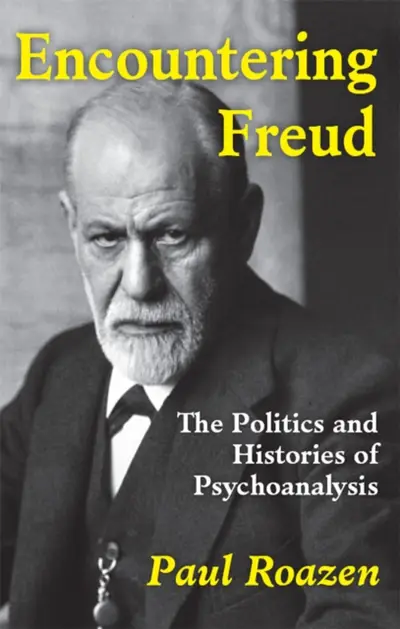
Encountering Freud
The Politics and Histories of Psychoanalysis
Price and availability
$74.99
Available in: Andorra, Austria, Australia, Belgium, Bulgaria, Canada, Switzerland, Cyprus, Czechia, Germany, Denmark, Estonia, Spain, Finland, France, United Kingdom, Guernsey, Greece, Croatia, Hungary, Ireland, Isle of Man, Iceland, Italy, Jersey, Japan, Liechtenstein, Lithuania, Luxembourg, Latvia, Monaco, Malta, Netherlands, Norway, Poland, Portugal, Romania, Sweden, Slovenia, Slovakia, San Marino, United States, Vatican City, South Africa
Stores: US, UK, Canada, EU, Australia.
Sign in to buyThe price is re-checked by the server before payment.
For personal use under the eBook licence.
- Format
- DRM
- Not stated by the publisher
- Language
- English
- Publisher
- Taylor & Francis
- Published
- 8 September 2017
- ISBN
- 9781351317078
- Subjects
- Psychology, Psychoanalytical theory (Freudian psychology), Political science & theory, Europe, United States of America, USA, Psychoanalytical and Freudian psychology, Social and cultural history
About this book
In this volume Paul Roazen examines different national responses to Freud and the beginnings of psychoanalysis. He examines Freud's work in the contexts of law, society, and class, as well as other forms of psychology.Encountering Freud includes a brilliant essay on Freud and the question of psychoanalysis' contribution to radical thought, in contrast to the conservative tradition. Roazen takes up the extravagant claims of Marcuse and Reich, and sees the risks of then overglamorization of the beginnings of psychoanalysis as a profession. Roazen views the legacies of Harry Stack Sullivan, Helene Deutsch, and Erik H. Erikson as less rich because their work conformed to the social status quo. He sees Freud's inability to avoid an ambiguous outcome as a lack of concern with normality and a refusal to own up to the wide variety of psychological solutions he found both therapeutically tolerable and humanly desirable.Roazen concludes with a series of explorations on the dichotomies Freud left behind: clinical discoveries versus philosophical standpoints; the relationship of normality to nihilism; and a defense of a therapeutic setting based on trained specialists versus a therapeutic approach encouraging self-expression. This is a volume that utilizes a sharp focus on Freud and his followers and dissenters to explore the question of political psychology at one end and psych-history at the other end of analysis.
Bibliographic data © Gardners Books Ltd.